Whether you’re reading from out of town, judiciously signed up for a happy hour or two, or (like us) have calendars so full they that look like abstract art, it’s finally time to put down the laptop and get out on the town.
Working on climate can be hard; community is what keeps us going. So get out there, make some new friends, discover a new niche, and exhaust yourself while recharging your excitement for the work ahead.
If your schedule isn’t fully packed, be sure to check out the latest events added to our Airtable. Sort by created date to see what’s been added.
And now, the weekend ahead, we have a few special invites:
🦬 Bears, Fish, and Bison conservation at Animal Stories (Sun. at 12:30pm)
🛶 Indigenous stories, solar power, and the Amazon at River of Spirits (Sun. at 3:45pm)
We’d also love to see you at our free public programs (from data centers to Robert Redford) and of course throughout the weekend.
What We’re Hosting
A few of events we (Alec & Sonam) are running this week:
Climate Film Festival
🎬 The week starts with the Climate Film Festival, with more than 50 films alongside free panels, workshops, and conversations with filmmakers, scientists, organizers, studios, and cultural leaders. Films are ticketed; most panels and workshops are free. Browse the full program and stay tuned for the a deeper guide.
Narrative Change Summit
🎙️ Climate has an image problem. Come to the full-day Narrative Change Summit for day for the people using film, media, and culture to connect across a fractured media landscape. It’s a place for filmmakers & entrepreneurs, journalists & scientists, creatives & funders. Jam-packed with 12 sessions, a star-studded lineup, and unexpected guests (who knew a former Bachelorette contestant is now nerding out on climate & insurance?)
📺 Potential Energy Coalition uses kitchen-table issues to open climate conversations through unscripted television and social media. RSVP.
♻️ Sustainability leaders at NBCUniversal bring sustainability into one of the world’s largest studios and media companies. RSVP.
📱 GoodPower works with a network of social-media creators to build support for renewable energy in unexpected places. RSVP.
😱 Horror and comedy connect with new audiences. RSVP.
🍄 Scientists, data artists, and magazine editors bring underground mycorrhizal networks into public awareness. RSVP.
🏟️ The sustainability team at the Seattle Seahawks works with Ocean Conservancy’s Protect Where We Play to engage sports fans through the stadium experience. RSVP.
⚡️ Community leaders from Standing Rock, Appalachia, and the Amazon work with the Honnold Foundation to co-create stories around renewable energy, resilience, and local power. RSVP.
🌇 The city as a source for climate stories, with Mayor’s Office of Media Entertainment commissioner Rafael Espinal & Global Rise climate fellows, and more amazing speakers. RSVP.
📰 Journalists demonstrate how reporting can create real-world change, even in a challenging media environment. RSVP.
🎬 The award-winning directors behind Blackfish and The Cove explore the relationship between filmmaking and activism. RSVP.
💡 Climate founders move beyond the pitch deck, working with academy award winners to make complex solutions memorable and accelerate adoption. RSVP.
Streetlife Ventures
⚡Monday if you want to see technology rather than another pitch deck, join our Climate Tech Demo Series with Streetlife Ventures and Collab Fund. Six startups will demo batteries for renters, materials that lower skin temperature in extreme heat, and other tools for making cities more livable.
🏙️ Tuesday Streetlife Ventures joins London and New York leaders at Building Sustainable Cities - Clean Energy Edition, focused on transatlantic innovation, infrastructure, investment, and the ecosystems that help urban climate technology scale and Adaptation in Action bringing together climate adaptation startups, investors, corporate buyers, and policymakers to discuss how adaptation is being implemented in cities across the globe.
🥤 Come find us at Shakes and Cakes with Climate Friends in Madison Square Park, our own no-speeches, no-sponsors gathering with Streetlife Ventures. Just shakes, cakes, and fresh air!
Still looking for an event? The Airtable is now up to 1,100+ events. Sort by created date to see what’s been added. And don’t for get our guide:
We’ve put a lot of hours into building out the most comprehensive guide to Climate Week events, and we also share weekly newsletters throughout the year.
This Climate Week guide has become our annual fundraiser. If you’d like to support our work, please subscribe!
As a thanks to our subscribers, we provide the full list as a downloadable CSV for you to slice, dice, and drop into your favorite LLM. It’s password protected, for access, subscribe:
This post has bonus content for paid subscribers. Upgrade to get full access.
Welcome to the Big Apple! We're here to help you meet people IRL, enjoy the sights and sounds of our beautiful city, and plan for the biggest climate event of the year 🗽
NY Climate Week returns this fall with events happening across the five boroughs! We counted 950+ events between from September 20-27, nearly double the number we included in our The Great NY Climate Week 2025 Guide. Coinciding with the UN General Assembly, NY Climate Week 2026 still holds the title of the world’s largest and most sprawling climate takeover. It pulls in 100,000+ attendees from startups, investors, corporate titans, scientists, policymakers, and grassroots activists for seven jam-packed days of high-stakes panels, creative demo sessions, late-night happy hours, and non-stop networking.
Climate Week is whatever you make of it. You can spend Monday watching six startups demo battery hardware for renters and Tuesday counting trees in Crotona Park with the NYC Parks Department. You can board an 1885 tall ship at South Street Seaport for an oceans event, take the Staten Island Ferry with dozens of founders and investors, learn to fix a bike at the Museum of Reclaimed Urban Space, or watch fifty films at the Climate Film Festival. There is even a whale watch leaving Sheepshead Bay and Climate Karaoke under a disco ball in the Lower East Side. And yes, business still gets done here. If you’re raising, hiring, buying, investing, or building, there are plenty of matches made in our streets and neighborhoods.
Lean into the city itself. Take a Citibike rather than the subway at least once. Enjoy waterfront views with a ferry ride. Get above 96th Street and below Canal. The Bronx River has foragers on it, Governors Island has a climate campus on it, and the Rockaways have dunes that people are rebuilding by hand on the last Sunday of the week. There are events across the five boroughs - get out and explore them all!
At 🌎 Climate Tech Cities and 🌇 Streetlife Ventures, we’re here to support climate founders, funders, and the broader community - this is our guide to help you cut through the noise and choose your own adventure. The official Climate Week NYC website is a useful place to start, but there are hundreds of events happening across the city and online that never make it onto the calendar. Our guide brings together a mix of in-person and online events, so you can find the conversations and connections most relevant to you. There’s a lot happening at once, so don’t just fill your calendar from morning to night. Make the most of being in New York: meet people IRL, join the conversations that matter, and enjoy the sights, sounds, and energy of the the best city in the world.
There are 1,085 events, 176 pages, and a total of 33,717 words (!) - we’ve categorized all of them across 25 themes and picked our favorites. We also have a “Top Hits” list of where we’ll be and what we like! Given the wide breadth and depth of the conversations to be had and friends to be made, we’ll keep updating the guide and have a rolling list leading up to the big week itself.
A guide to the guide:
💚 Heartwarming Masterpiece of an Introduction (You’re here)
🌇 Our Community Focused on Cities x Climate
📅 How to Climate Week (definitely read this if you’re a first timer)
Want to download the full list? Become a paid subscriber.
Stay in the loop on climate events across our Climate Tech Cities ecosystem all year for the price of a slice of NY pizza.
This annual guide is a labor of love and a resource for the community - your dollars help us put on demo nights, happy hours, topical panel sessions, climate site visits, and more for our 25,000+ network across the world. If it saves you hours of scrolling and provides some value, spread the good word and we’d appreciate your support!
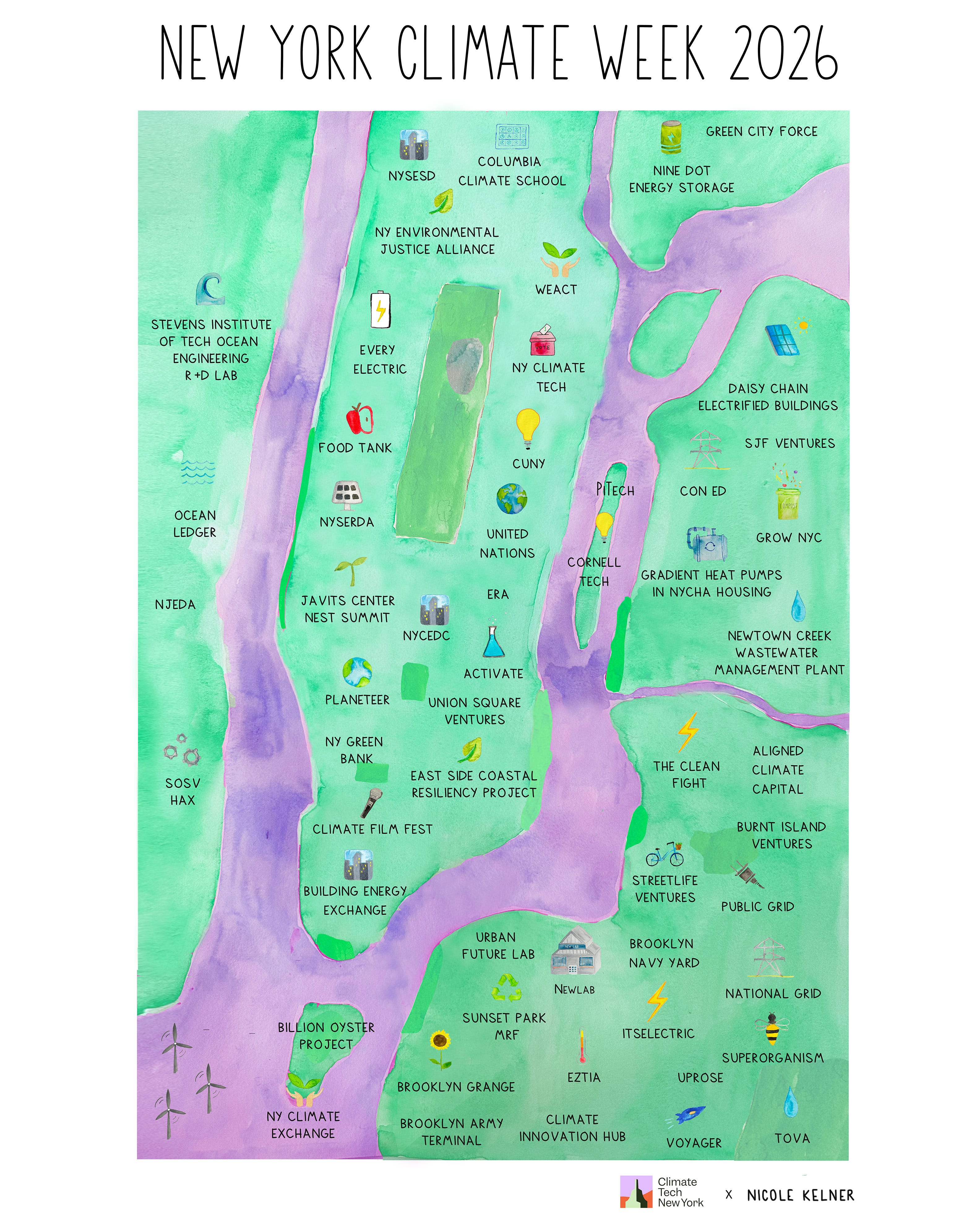
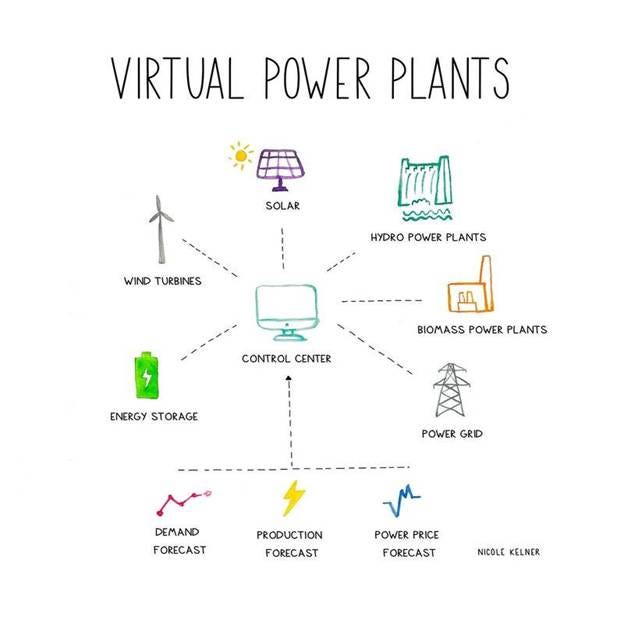
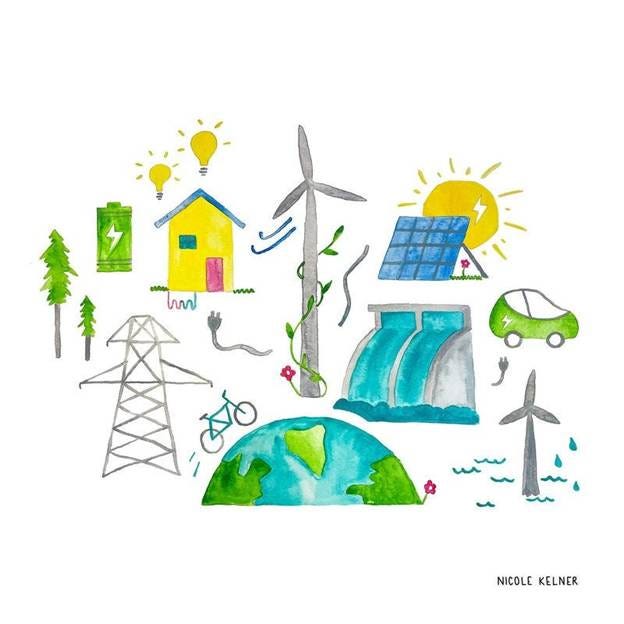
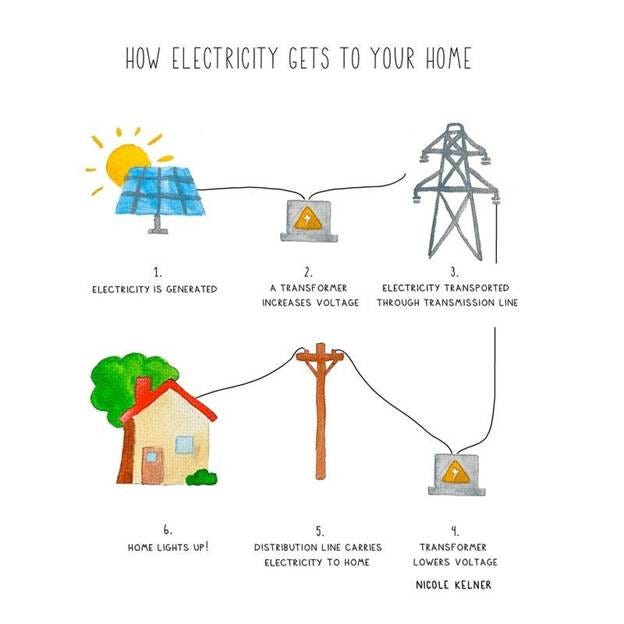
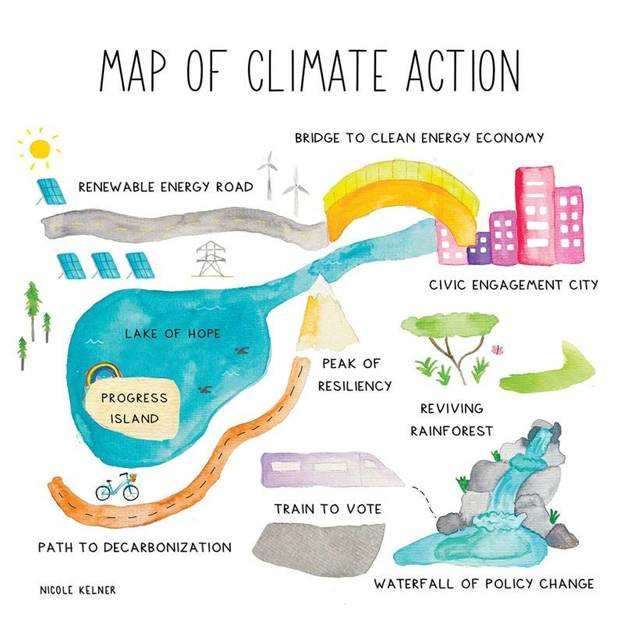
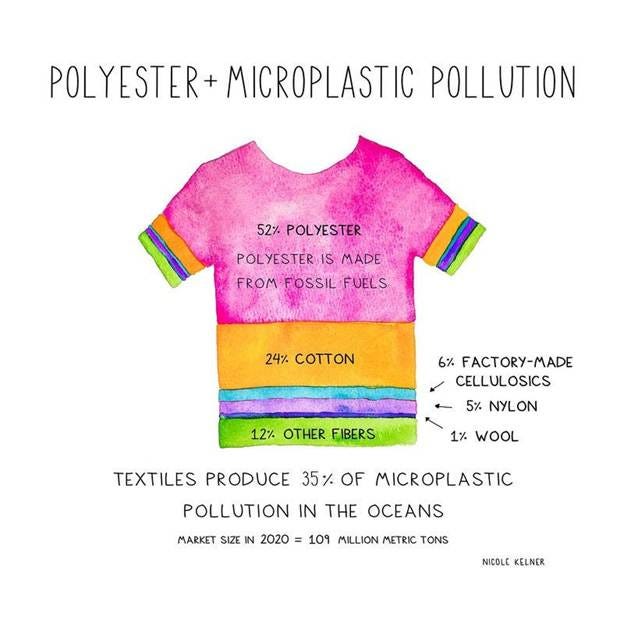
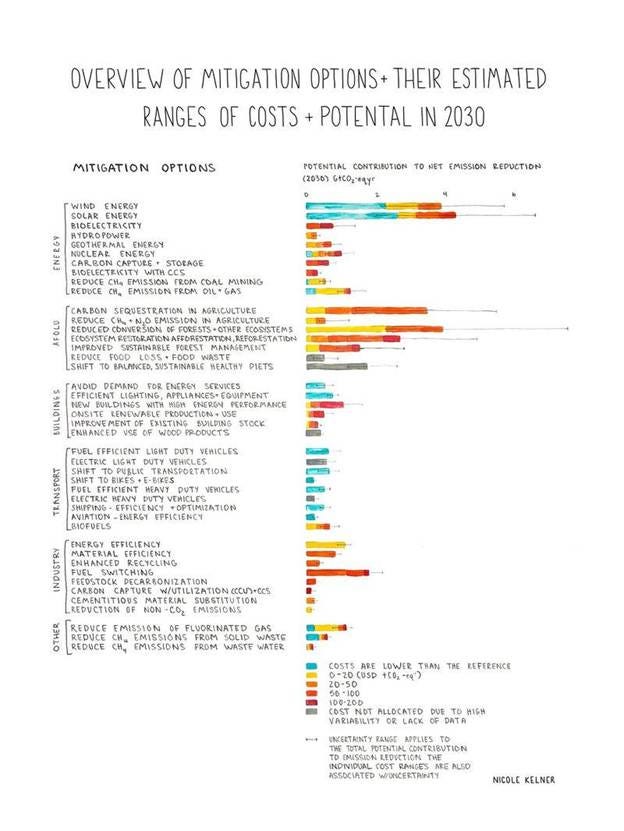
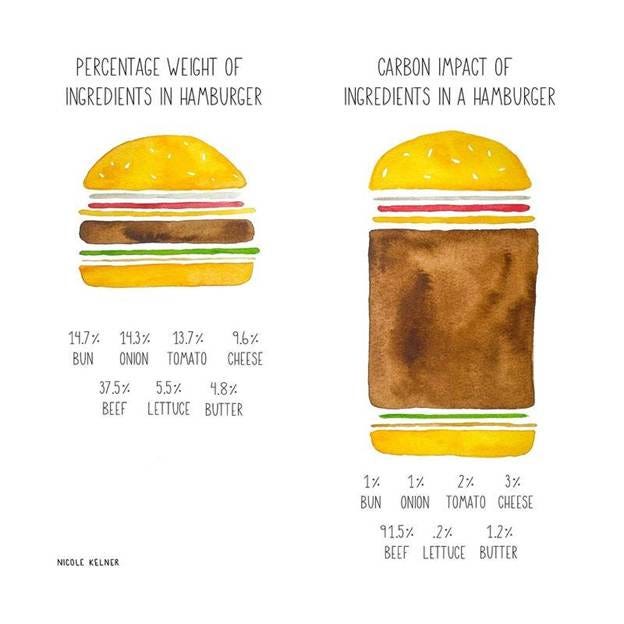
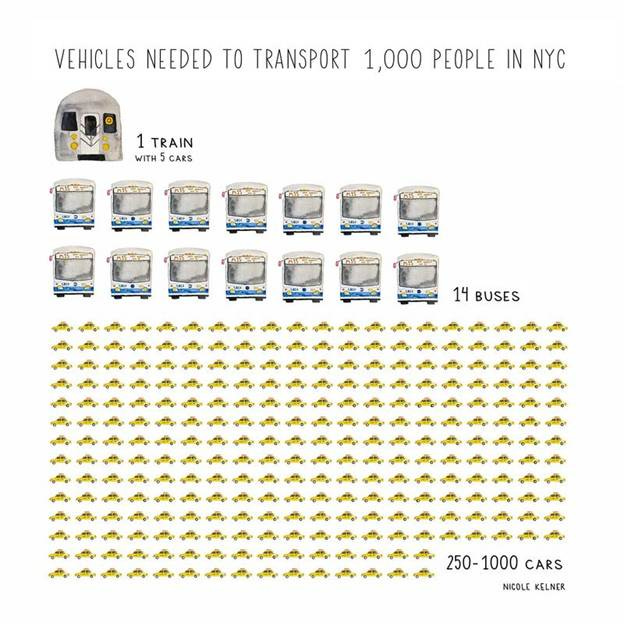
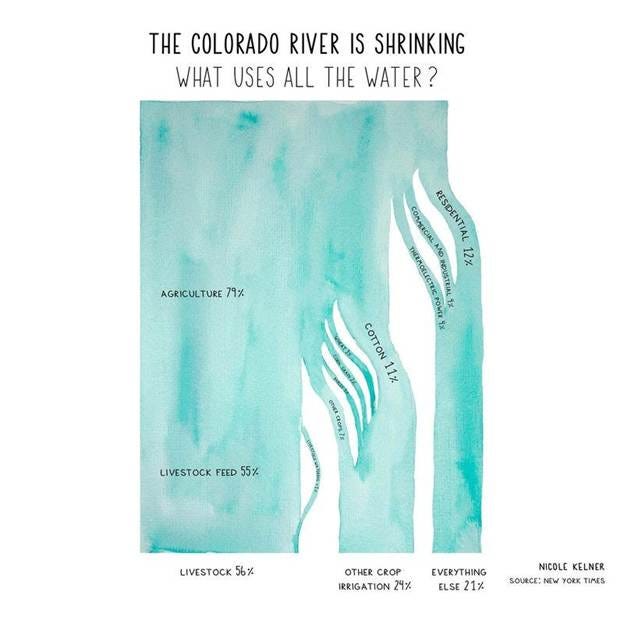
And last but not least, we’re excited to once again feature the work of one of our favorite New Yorkers, Nicole Kelner, throughout the guide below. Nicole is the founder of Arts and Climate Change, an organization that uses art to make climate communication more accessible. She creates educational content for all ages and is the author of Electrify Everything, a coloring book about clean energy, as well as The Quietest Places in New York City (in case you need a little respite!). Her clients include the U.S. Department of Energy, Harvard, The Guardian, and Sunrun. You can follow her work on her Website, Instagram, Substack, and more. Nicole uses watercolors to imagine and visualize the world we want to live in, and she’s been kind enough to create a piece highlighting New York’s climate ecosystem for everyone joining us during NY Climate Week.
We hope these streets will make you feel brand new and the big lights will inspire you! We look forward to seeing you! 🍎
We are thrilled to showcase the artistic talents of one of our favorite New Yorkers, Nicole Kelner, throughout our guide below! You can have your very own copy of the NY Climate Week map here!
🌎 Climate Tech Cities and 🌇 Streetlife Ventures are based in New York and collaborate with climate founders, funders, and the broader community across the globe. We aim to shift the narrative from doom and gloom to agency and optimism, bringing climate solutions to our streets and neighborhoods.
🌎 Climate Tech Cities is the world’s largest place-based climate tech community. We bring together over 25,000 entrepreneurs, investors, activists, scientists, and policymakers to take climate action in cities across the globe. We send weekly newsletters and host topical panels, happy hours, site visits to infrastructure projects, and more. Newcomers and old hands in climate are welcome to work on, share, and grow as we build solutions towards a decarbonized future. Join one of our chapters in New York, Boston, Washington, DC, Chicago, Seattle, San Francisco, Los Angeles, San Diego, Amsterdam, or London - or start your own! If you’d like to get involved, please fill out this Airtable and we look forward to bringing you on board!
🌇 Streetlife Ventures invests in the $5 trillion market opportunity at the intersection of cities and climate. Co-Founders Laura Fox and Sonam Velani leverage our 30+ years of urban experience, our Climate Tech Cities community platform, and our urban deployment ecosystem, supporting founders to bring their climate solutions to life. We invest in pre-seed and seed startups across the buildings, energy, mobility and logistics, waste and water, and adaptive infrastructure sectors. We also partner with cities, corporates, real estate firms, and infrastructure groups to help startups deploy and de-risk their technologies, access non-dilutive capital, and accelerate commercialization. We are dedicated to advancing cities, focusing on people and the places they call home.
Over the years, we’ve launched new platforms to support climate founders, funders, and career transitioners! There is no shortage of great companies raising money for their groundbreaking ideas, great investors looking to support with capital, and great talent living the mantra that every job is a climate job. We are happy to help connect the dots, and we can’t wait to hear from you!
The Climate Group started Climate Week in 2009 to coincide with the UN General Assembly, when world leaders unite to shut down traffic in midtown Manhattan. It has always overlapped with UNGA as a clear opportunity to make climate front-and-center of the international agenda. In the years since, NY Climate Week has grown into a distributed conference and hub for everyone working in climate.
If it’s your first NY Climate Week, give yourself room to explore. Pick a few events you’re excited about and leave time for the unexpected. Some of the best conversations happen between events and in the great outdoors, and this year there’s plenty to discover across all five boroughs!
🎯 Our Top Hits List: Where We’ll Be and What We Like
950+ events, all across New York. So what’s actually worth putting on your calendar?!? We’ve spent years getting to know the people and places shaping the city’s climate scene, and we’re bringing our picks together here, day by day, from the skyscrapers of Manhattan to the beaches of the Rockaways.
(Also we know these are a lot… but there are even more we love and didn’t fit in! Scroll down for the category-by-category highlights.)
Opening Weekend (Friday, September 18 - Sunday, September 20)
🎬 The week starts with the Climate Film Festival, with more than 50 films alongside free panels, workshops, and conversations with filmmakers, scientists, organizers, studios, and cultural leaders. Films are ticketed; most panels and workshops are free. Browse the full program and stay tuned for the a deeper guide.
Monday, September 21
🎙️ Climate has an image problem. Come to the full-day Narrative Change Summit for day for the people using film, media, and culture to connect across a fractured media landscape. It’s a place for filmmakers & entrepreneurs, journalists & scientists, creatives & funders. Jam-packed with 12 sessions, a star-studded lineup, and unexpected guests (who knew a former Bachelorette contestant is now nerding out on climate & insurance?)
⚡ If you want to see technology rather than another pitch deck, join our Climate Tech Demo Series with Streetlife Ventures and Collab Fund. Six startups will demo batteries for renters, materials that lower skin temperature in extreme heat, and other tools for making cities more livable.
🏃 Set your alarm for OutRun CO2 Club, a 6:30am conversational-pace 5K with Onto Ventures and Planeteer Capital, complete with coffee and pastries afterwards.
⚖️ Head to the Frontline Resource Institute Climate Justice Hub at Fordham University for a program bringing frontline leaders together with policymakers, researchers, funders, and students for practical sessions on storytelling, community data, cities, and data-center power or learn more about the intersection of the energy transition and indigenous communities at Rights, Risk, and Resilience at the Yale Club.
🚀 Head to the Brooklyn Navy Yard for the Venture For ClimateTech Innovation Showcase at Newlab, highlighting ten startups across buildings, transportation, grid, and industrials. Catch some of those same startups on stage with professional storytellers at The Live Edit.
🌊 All aboard the 1885 tall ship Wavertree at South Street Seaport for The Ocean Awakens, a half-day on plastics, maritime tech, and how ocean work gets funded.
🎓 The MIT Solve Challenge Finals mark ten years of the program with a full day of ventures addressing climate and social-impact problems, and Yale @ Climate Week NYC has full day programming in midtown, with parallel sessions on resilient cities, adaptation, health, carbon markets, climate migration, grids, urban ecology, trade, and bipartisan policy.
🏙️ Streetlife Ventures joins London and New York leaders at Building Sustainable Cities - Clean Energy Edition, focused on transatlantic innovation, infrastructure, investment, and the ecosystems that help urban climate technology scale.
👩🏻🔬 Wondering how to sell your latest innovation to corporate buyers? Head to the new BATWorks climate hub in Sunset Park for Beyond the Pilot: Securing Corporate Adoption program featuring energy companies and utilities, alongside venture investors like Streetlife and startups including Gradient and Trainsit.
🔬 At Live from the Future: A Hard-Tech Showcase, get a glimpse of cutting-edge technology coming out of labs from the incredibly talented cohort of Activate scientist-entrepreneurs. One of our favorite spots of the week.
☔️ Then come to the Adaptation in Action! showcase with Streetlife Ventures. Startups, investors, corporate leaders, and policymakers will showcase creative solutions across cooling, flooding, water, insurance, and the grid.
💡 VisitSolutions House NYCfor their day focused on climate, entertainment, and media, and swing back by for events throughout the week.
🦆 Start with binoculars at Birding & Bagels Bonanza, Planeteer Capital and Superorganism’s third annual fall migration walk led by real ornithologists.
🏗️ The FOAK Summit brings together senior leaders from across the value chain, including capital providers, EPCs, strategic corporates, offtakers, insurers, regulators, and growth stage startup founders who are gearing up for a first-of-a-kind deployment.
🏢 Ceres Mainstageputs corporate climate action on stage with topics ranging across the climate spectrum.
💡C2ES Solutions Central takes over two floors near Bryant Park for batteries, extreme heat and power infrastructure, industrial decarbonization, resilience, and climate policy.
🔥 Heatmap House runs from energy geopolitics and federal policy through mobility, climate tech, AI, and reindustrialization from one of our favorite media outlets. But really, you’ll find us at the the afterparty.
📊 MSCI Climate Week NYC covers physical risk, energy disruption, AI exposure, adaptation investment, and portfolio strategy.
💰 Join the Culture Shifting Summit for deal-making among diverse tech executives, investors, and social impact leaders.
🏝️ Take the ferry to the Climate Solutions Showcase at Governors Island. See passive-cooling shelters, flood barriers, EV charging, building systems, and resilience tools in action, then join a climate-tech crawl around the island.
🛠️ New Climate Futures at Newlab is always worth the trip to the Brooklyn waterfront. It’s a stunning space and has 70+ deep-tech startups, live demos, and over 1,000 people each year at the Brooklyn Navy Yard.
💸 The Climate Capital Summit returns for its fourth year with senior leaders across investment, energy, policy, and climate technology. Worth it if you get in
🌿 Green on green at the Ceres Nature Hive for business-and-finance programming on nature and biodiversity.
🛡️ Exploring Risk, Resilience and Opportunity is S&P Global’s principal Climate Week program and a strong choice for leaders working across risk, investment, heat, infrastructure, and the resilience economy.
🥵 Feeling hot? That’s been the theme for several global Climate Weeks this summer, and continues with the Invisible Crisis: Innovating for the Age of Extreme Heat at SOSV with startups and investors scaling adaptation solutions.
🎨 The free Creative Climate Forum: Collective Power fills Pier 57 with panels, performances, workshops, nature walks, and immersive installations centered on climate justice and culture.
🌳 After dark, Atmos Presents Enchanted Forest transforms the New York Public Library into an evening of ecology, art, music, science, Indigenous thought, and storytelling.
🚢 And finally hop on the Staten Island Ferry at Climate Week, but on a Boatwith the Urban Future Lab. No programming and no moderator. Just an hour of open conversation with the people building and funding climate in NYC, while the Statue of Liberty eavesdrops. There and back again.
🎤 Sing your heart out at Climate Karaoke, a Climate Week institution.
Friday, September 25
🥤 Come find us at Shakes and Cakes with Climate Friends in Madison Square Park, our own no-speeches, no-sponsors gathering with Streetlife Ventures. Just shakes, cakes, and fresh air!
🏄 Trade the conference room for the ocean at the NYCW Surfing Event with Propeller Ventures and Onto: ferry out to the Rockaways, lessons for beginners, lunch before the ride back.
🏭 The full-day Industrial Electrification Symposium at NYU MakerSpace is the more technical choice for people doing the difficult work of decarbonizing industrial processes.
⚓️ Finish the day by circling Manhattan on the AIANY Climate Change and Architecture Tour, a 3-hour narrated sail past elevated shoreline parks, retrofits, and the Climate Exchange on Governors Island.
Closing Weekend (Saturday, September 26 - Sunday, September 27)
🌾 Food Tank at WNYC’s Greene Space:Sept. 19–25. A week of programming on food, farming, policy, culture, and the future of the food system.
🌱 Regen House: Sept. 21–24. The gathering place for regenerative food, agriculture, textiles, finance, and the people trying to move “regenerative” from adjective to operating model.
🛡️ The Nest Campus:Sept. 22–24 at the North Javits Center. A large, three-day resilience-economy campus with extensive programming across climate, business, policy, and innovation.
🏢 Ceres Mainstage at Climate Week NYC:Sept. 23 at Convene, Rockefeller Center. A full day of business, finance, policy, transportation, investor, and corporate-sustainability programming.
🌐 World Climate Summit: New York 2026:Sept. 24 at Civic Hall. An institutional climate-and-nature summit for investors, policymakers, financial institutions, and corporations.
🌳 Climate Week at the New York Botanical Garden:Sept. 21–27. A weeklong alternative to the conference circuit, with programming connecting plants, biodiversity, science, and climate.
💡 Solutions House NYC: Expected back for its fifth New York edition with its usual mixture of solutions, culture, business, media, and public programming.
🎯 Goals House at UNGA: A prominent home for conversations orbiting the Sustainable Development Goals and UN General Assembly.
InnSure convenes insurers and reinsurers, climate tech founders, investors, sustainability leaders and policymakers for its fifth Climate Forum alongside GreenieRE, Holland & Knight, RMI and Environmental Defense Fund. The program uses panels, innovator pitches and working roundtables to explore how insurance, finance and risk management can accelerate both decarbonization and climate resilient innovation. The day also includes the winner announcement for InnSure’s Decarbonization Risk Management Innovation Prize.
ClimateTech Connect brings its NYC edition to Climate Week for an afternoon at the intersection of climate risk, resilience, insurance, finance and technology. Leaders from reinsurance, financial services and real estate join climate data and technology innovators for discussions and live demonstrations focused on how organizations can better predict and prevent losses, then respond and recover when extreme weather hits. The program mixes panels, technology demos, networking and cocktails.
Cities have always been humanity’s greatest engines of opportunity and invention - and they’re now where the consequences of climate change hit hardest. This session brings adaptation startups, investors, corporate buyers, and policymakers together to get concrete about how resilience gets built: parametric insurance and other financing models, flood protection systems, heat mitigation to keep workers and residents safe, and grid and water resilience in urban environments. Hear how New York and other global hubs are turning themselves into living test beds for new solutions. The rapid-fire pecha kucha startup showcase is an annual NYCW highlight and a look at what’s hitting the market. Hosted by Streetlife Ventures with Burnt Island Ventures, Tailwind Futures and Stepchange Ventures, close out the evening with great food and even greater conversation thanks to our sponsors at Brown Rudnick.
Governors Island turns its climate pilots into a walkable showcase, with more than two dozen technologies addressing challenges including chronic flooding and extreme heat. The afternoon features adaptation pitches, fireside chats and live demonstrations before a Climate Tech Crawl traces the installations across the island. The showcase offers one of the best ways to see what climate adaptation looks like when technologies move from pilot projects into real world deployments.
Extreme heat is the climate threat that rarely makes the front page and touches nearly everything: heat stress and lost productivity, disrupted pollination and falling crop yields, power plant cooling limits and transformer failures, overheated data centers, buckling roads and rails, leaking pipes, and machinery running past its limits. Campus Deep Tech, Anywhere Ventures, the Hazelwood Network, and Tailwind Futures curate startups, investors, industry, and academics for panels on those challenges, startup presentations on the cooling and heat-resilience technologies being built to meet them, ecosystem spotlights, and a networking reception with drinks and bites.
Siemens runs a hub for customers and partners across the week, focused on where industrial technology, AI, and decarbonization meet, and culminating in flagship programming on Wednesday. Six co-hosted sessions cover the ground: efficiency and electrification as the twin engines of transition with the Energy Efficiency Movement, sustainability data as competitive advantage with UL Solutions, the circular industrial economy with Bain, Envetec, Haddy, and Volkswagen, infrastructure innovation with the Information Technology Industry Council, managing hyperscaler shock on the grid while accelerating the energy transition with WBCSD, and climate literacy and disinformation with Siemens Stiftung. It sits alongside the company’s $1B bet on American industrial investment.
Forecasts show data center power demand more than doubling by 2027, climbing from 31 to 66 gigawatts and taking the sector from roughly 4% to 8.5% of U.S. peak summer demand. EnergyHub uses that trajectory to ask a harder question: who pays for all that new power? The company points to the most recent PJM capacity auction, where data centers drove 38% of charges, and to New York’s first-in-the-nation moratorium on new hyperscale facilities. The proposed alternative is flexibility: virtual power plants that connect batteries, EVs and smart thermostats and can add capacity in months rather than years. ConnectedSolutions, a cross-utility program operating with National Grid, Eversource and other New England utilities, provides a real-world case study, with 280,000 enrolled devices delivering more than 800 megawatts of flexible capacity.
What happens when an AI data center lands in a town that already has a complicated history with industrial development? Retro Report brings journalists, nonprofits and community organizers to Midtown to explore how fights over data centers are reshaping local politics across the country. The conversation draws a line from today’s AI buildout to earlier waves of steel mills, coal plants and fracking, with Maia Woluchem of Data & Society’s Trustworthy Infrastructures program, Texas Tribune reporter Alejandra Martinez, Protect the Paluxy Valley’s Brian Crawford and Food & Water Watch organizer Ginny Marcille-Kerslake joining moderator Kit R. Roane. The evening also marks the launch of Data & Society’s report The AI Factory, based on eighteen months of field research in Pennsylvania.
Decarbonizing the grid as fast as possible and meeting surging AI and data center load are usually treated as competing problems, and solving either alone risks undermining the other. Cornell Atkinson convenes a cross-sector roundtable of leaders in power generation, large-load and data center operations, energy policy, and clean energy finance to treat them as one integrated challenge. No panel and no presentations: a facilitated working discussion where participants surface the most pressing questions practitioners face and identify where research, data, and new partnerships can move the needle, with New York’s evolving regulatory landscape as the live test case.
The morning starts with a networking breakfast before Arnold & Porter and the Business Council for Sustainable Energy turn to one of the consequential parts of the AI boom: getting data centers built. The panel brings together policymakers, developers, utilities, corporate sustainability leaders and legal practitioners to work through permitting, power demand, environmental review and community engagement, drawing on projects currently navigating those processes. The conversation then turns to the growing wave of legal challenges and environmental disputes surrounding data centers, and what those cases can teach the people building, regulating and financing the next generation of AI infrastructure.
More than fifty films and thirty-plus premieres unfold over five days at the Museum of the Moving Image and Regal Essex Crossing cinemas, bringing together features, shorts, and episodic work selected from a global open call. The films meet a warming world with rigor, imagination, and surprise, while a parallel Filmmaker Forum adds talks, workshops, and partner events around the screenings. The Narrative Change Summit gives climate professionals, filmmakers, scientists, organizers, funders, and cultural leaders a focused day to explore how climate stories get made and how they can change the way people understand the crisis.
Along the Jamaica Bay waterfront at Shirley Chisholm State Park, the Waterfront Alliance unveils Littoral / Litoral, a new public art installation by Camila A. Morales created through Submerse NY. The work, developed with New York Sea Grant and Cornell University’s New York State Water Resources Institute, traces the connections between water, community, and a shoreline in transition. Flooding and sea level rise sit alongside the bay’s ecological and cultural significance, turning climate adaptation into something visitors can experience through art. The afternoon includes the artist’s account of her vision, along with introductions to the project partners and community leaders behind the work.
Please Don’t Flush!: All Week (Four performances) | Staten Island, Queens, & Brooklyn
A municipal comedy about a community board scheduled to vote on a mysterious waterfront development that neighbors, seagulls, and plumbers fear will worsen inland flooding, until the meeting gets derailed by gala planning, the second-vice-chair’s half birthday, and locking the anti-anti-anti-anti-development coalition in the bathroom. Written and directed by Sabina Sethi Unni and developed with NYC Emergency Management and the Waterfront Alliance, it’s the follow-up to Flood Sensor Aunty, which toured twenty public spaces across the city. The show travels with music, laughs, and flood-preparedness resources, and community partners like Chhaya CDC, the Center for Urban Pedagogy, and the Queens Memory Project table at each stop. Catch it 9/19 in Stapleton, 9/20 at Baisley Pond Park in Jamaica, 9/22 at Van Alen in Gowanus, or 9/27 at Queens Botanical Garden in Flushing.
Aboard the Tall Ship Wavertree at the South Street Seaport Museum’s Pier 16, three short documentaries bring waterfront climate stories to life before a conversation among community members, advocates, planners, and storytellers on what resilient waterfronts can look like. The Climate Film Festival and Waterfront Alliance program the evening with the museum. Moon Tides follows citizen scientists in coastal New England trying to save the Saltmarsh Sparrow one nest at a time; Refuge Keepers tracks fishermen and conservationists building a marine refuge in Celestún, Mexico; and Holdfast Together dives alongside scientists restoring Northern California kelp forests and the endangered sunflower sea star.
What if decarbonization looked not only to new technologies, but to the places, materials, and practices communities have already developed to live with their environments? The Climate Heritage Network, Cornell Atkinson Center for Sustainability, ICOMOS, ICLEI, the World Monuments Fund, and Architecture 2030 bring policymakers and built environment practitioners together at Cornell’s Gensler Family AAP NYC Center to explore that idea. The discussion focuses on bringing heritage-informed approaches into building and construction policy by 2030 under the UNFCCC Plan to Accelerate Heritage-Informed Building Decarbonization. Repairable low-carbon materials, salvage and reuse, climate-responsive design, and the transmission of traditional knowledge all feature, with COP31 as the coalition’s next major milestone.
Terraformation’s inaugural summit is about the delivery of large-scale reforestation rather than the pledges. The room is curated down for organizations moving from concept to implementation: project developers with boots on the ground, funders deploying capital, corporates with real nature commitments, and the community leaders whose knowledge and land tenure make restoration possible. Three concurrent working tracks structure the day: Who Pays for a Forest? on finance and investment models, The Art of Reforestry on tools, technology, and training, and Who Are Forests For? on Indigenous leadership and community equity.
As the ocean and climate crises accelerate in lockstep, Ocean Visions uses a morning at the New York City Bar to lay out the thorniest problems at the ocean-climate nexus: speeding the path to net zero, cleaning up legacy CO₂ at scale, and repairing critical ocean systems. Scene-setting presentations lead into a panel with speakers from Eco Wave Power, Ocean Resilience and Climate Alliance, Carbon to Sea, and Carbon Removal Canada, among others. The session also launches Launchpad 2.0, Ocean Visions’ next phase of support for ocean-climate innovators.
The US government’s abrupt withdrawal from its international conservation commitments in 2025 pulled roughly $500 million a year and decades of institutional expertise out of the field. Reimagining Global Conservation convenes practitioners, policy experts, and funders at Pier 57 to treat that rupture as an opening: what worked in the old system, what didn’t, whose perspectives carried weight, and what has to change. One Earth Partners presents findings from Beyond the Funding Gap, its assessment of USAID’s role in climate and environmental programming and the structural effects of its exit, followed by a panel of local practitioners with concrete reforms and proposals for a new global conservation playbook.
Ceres convenes a full-day Nature Hive at a Chelsea penthouse to work through the business and community consequences of nature and biodiversity loss, with three partner-hosted sessions. The morning is an Accountability Accelerator workshop on building the infrastructure for agrifood accountability through coordinated intervention stacks across finance, business, civil society, and government. After a networking lounge hour, Rainforest Foundation Norway draws on its Tropical Deforestation Outlook to lay out how market, financial, and policy incentives can stop driving deforestation, and the Accountability Framework initiative closes with new findings on whether companies sourcing from JREDD+ jurisdictions can engage those programs to advance their own supply chain goals.
The Taskforce on Nature-related Financial Disclosures runs a week of roundtables built around the release of its 2026 Status Report. Partners include Lloyd’s on nature as a CFO priority, Nasdaq and NatureFinance on nature and water risk in the tech sector, UN Global Compact and WWF on ocean-related disclosure, Goals House on closing the nature materiality gap in food and agriculture, and Oliver Wyman on how banks move from nature-risk assessment to better decisions. TNFD also announces final sector guidance for technology and communications at Climate Group’s AI Forum on Tuesday.
Decarb Summits opens the season three days early with a full day at Perkins Eastman on compliance, capital, and technology for NYC buildings. Emily Hoffman from the Department of Buildings shares lessons from year one of Local Law 97 enforcement and what owners need for 2030; Lauren Moss, Vornado’s chief sustainability officer, sits for a fireside on the REIT’s path to decarbonization; and a compliance panel brings together Community Preservation Corporation, L&M Development Partners, Bright Power, and Con Edison. The afternoon turns technical with sessions on solar-integrated facades, reinventing the window heat pump, air leakage, peak demand pricing, and the business case for solar, with startups including DaisyChain Energy, Helios Facade, and Aeroseal.
One of the greatest climate success stories most people have never heard of turns ten this year: the Kigali Amendment to the Montreal Protocol, which united nearly every nation, transformed refrigerant markets, and accelerated sustainable cooling. The Refrigerant Emissions Elimination Forum marks it with a full-day immersive destination for the cooling community, where building owners, manufacturers, engineers, contractors, technicians, policymakers, and investors move through interactive exhibits, live demos, expert discussions, and hands-on experiences on the future of HVAC.
Cement and concrete are the second most consumed material on the planet after water and account for 8% of global CO₂ emissions. Blended cements using supplementary cementitious materials can cut emissions per tonne by half with technology that already exists. National governments, international institutions, and industry gather to formally launch Blend Better Cement, the implementation vehicle for the UNEP-hosted Intergovernmental Council for Buildings and Climate’s Call to Action from COP30. A government leadership spotlight and moderated panel cover standards reform, low-carbon public procurement, local supply chains, and the roadmap to COP31 and COP32.
Housing advocates want faster approvals and fewer barriers to infill; decarbonization advocates want all-electric construction and stronger performance standards. They’re often treated as competing agendas, but well-designed infill housing cuts transportation emissions, lowers household energy costs, and protects residents from heat and smoke, while poorly sequenced requirements add cost, delay projects, and hit affordable and small-scale development hardest. Speakers from ULI, YIMBY, RMI, and BB Holdings discuss codes, incentives, permitting, utility coordination, and policy sequencing, closing with a set of shared principles. Hosted by ULI, the Housing-Climate Project, Gehl, the Parking Reform Network, and WRI as part of the Urban Climate Solutions Track.
After two decades of flat consumption, the grid is facing demand growth from building and vehicle electrification, extreme weather, and data centers all at once, and new generation is expensive and slow to bring online. Building Energy Exchange and USGBC ask whether buildings can be part of the fix rather than the problem, through load shifting, peak reduction, better envelopes, and geothermal.
The Carbon Removal Alliance opens New York Climate Week with a breakfast conversation about where the sector goes from here. Leaders from carbon removal, climate policy, and environmental advocacy take up the impact of AI, a shifting political landscape, and the challenge of building a broader coalition around the industry. An audience Q&A follows the discussion, giving journalists, policymakers, and industry leaders a chance to dig further into the forces reshaping the carbon removal landscape.
Eight organizations convene the carbon removal community at the opening of Climate Week NYC: the Carbon Business Council, Carbon180, the Carbon Capture Coalition, Carbon Removal Canada, the Carbon Removal Alliance, Carbon to Sea, Remove, and XPRIZE. The reception kicks off at 6pm, with the evening focused on connecting people across the growing carbon removal community.
Climate Week runs on coffee, badges, and back-to-back panels. Residual, oneshot.earth, and CEEZER offer the calm moment in the middle of it all: ceremonial-grade matcha whisked to order, and a chance to sit down with people from across the carbon market. Built for project developers, removal buyers and investors, the people building market infrastructure, and the carbon-curious who want to hear what’s happening in the industry. No panel, no agenda.
The Carbontech Development Initiative and Carbon to Value Initiative bring scientists, entrepreneurs, investors, and policymakers together for a public summit on where carbon management goes next. Doreen Harris of NYSERDA opens the afternoon with welcome remarks, and two panels tackle super pollutants beyond CO2 and the funding needed to scale carbon management. Startups will make fast pitches throughout the program before the summit closes with a networking reception.
Every reforestation project solves the same economic problem: nature doesn’t produce a return profile capital markets can price on its own. Sequestration takes decades, biological risk doesn’t map onto conventional underwriting, and MRV uncertainty makes cash flows hard to model. Blended finance exists to fix that, and this panel highlights a real-world case study: ACRE Investment Management’s GreenTrees, now the world’s largest ACR-registered reforestation project, which stacked USDA Conservation Reserve Program payments with landowner economics and carbon revenue back when carbon markets were unproven, and has since scaled across thousands of acres and multiple credit vintages. This session opens The Natural Capital Investment Summit, a day for investors, developers, and policymakers on how capital, technology, and standards finance nature’s restoration at scale.
Puro.earth, a leading crediting platform for engineered carbon removal, is heading to One World Trade Center for a full day on the next chapter of the carbon removal market. Suppliers, corporate buyers, investors, intermediaries, policymakers, and market builders work through panels, roundtables, and fireside chats aimed at trusted market growth and the scale-up of durable removal.
Sylvera puts carbon credits, physical low-carbon supply, and environmental attribute certificates in one room, three areas that corporate teams often manage separately. The rulebook underneath them is changing too, with SBTi V2 defining what can count toward a target and the GHG Protocol and ISO working toward a single corporate accounting standard in 2028. The speakers will unpack when physical delivery is worth its premium, when a certificate can serve as the bridge, and where carbon credits fit.
IETA closes out its 2026 regional summit series under the banner “The New Carbon Order: Innovation, Investment, and Interoperability,” positioned as a stepping stone to COP31 in November. Hundreds of delegates from the US, Canada, and beyond will gather for plenaries, technical workshops, and interactive sessions on compliance and voluntary carbon markets and the regulatory frameworks taking shape around them. Themes run from North American subnational markets and Canadian industrial carbon pricing to post-midterm US federal climate policy, trade tensions hitting carbon markets, carbon capture and removal, Article 6, CORSIA, and international market coalitions.
Newcomers to carbon and long-time practitioners share the room at the seventh Carbon Newbie Summit, a casual conference designed to make the subject less intimidating. The summit uses unexpected lenses this year, running climate through sports, insurance, science and everyday influence. CNaught, Debevoise & Plimpton, Trane Technologies, Clever Carbon and the University of Toronto’s Lawson Climate Institute co-host the day.
GO2 Markets brings sustainability, procurement, and supply chain leaders from large corporates together for a panel and networking program built around a fundamental Scope 3 problem: companies face accountability for emissions they often cannot directly control. Nearly 80% of sustainability leaders name supplier data as their biggest barrier, yet companies that actively engage suppliers hit their Scope 3 targets at nine times the rate of those that do not. Hear from Mastercard, Toyota, BASF, and others in this morning session.
The Circular Supply Chain Network hosts its first summit for supply chain professionals who are building circular operations, with the conversation grounded in material flows and decision-making power. The morning brings industry leaders and practitioners on what circularity looks like inside live operations; the afternoon turns into hands-on workshops built around circular supply chain problems.
Nine speakers, three minutes each, one brewery. Community Climate Hub brings its flagship lightning-talk series to KCBC in Bushwick with the circular economy at center stage: Brooklyn Creative Reuse, Brooklyn SolarWorks, Big Reuse, BK ROT’s bike-powered composting, 350Brooklyn, and more. Each shares one big idea, then the floor opens for questions and networking over light bites and happy hour beers.
The US imports the vast majority of the critical minerals behind its defense, aerospace, and semiconductor industries, but a meaningful share of what it needs may already be sitting in waste piles at existing industrial sites. KOMPAS VC, SOSV, and At One Ventures host a breakfast on what it takes to turn that waste into supply, and why the answer lies in corporate partnerships between deep-tech startups and industrial incumbents rather than one company going it alone. Helios and Atalco walk through a live example of moving from pilot to commercial scale on infrastructure that already exists, and ChemFinity shares what an early-stage recovery company is looking for from industry as it grows.
Bain & Company, Envetec, Haddy, Volkswagen Group and Siemens draw on industrial systems to make the case that circularity extends far beyond recycling. The forum follows materials across the full product lifecycle, from design and manufacturing through refurbishment, remanufacturing, recovery and new service based business models. Speakers from startups and global industry show what it takes to keep materials in use, design waste out of operations, and make circular systems work at scale. The forum offers a practical look at how circularity moves from a sustainability idea into an operating and economic model.
Billions of dollars of recoverable critical minerals sit inside deployed and retired clean energy assets, and today’s economy assigns them zero residual value because lenders and insurers can’t track, value, or underwrite what’s embedded in them. This breakfast at Columbia, hosted by the Columbia Center on Sustainable Investment, Carbon Trust, Solas Capital, the Ellen MacArthur Foundation, and Buckstop, is built for the lenders, insurers, institutional investors, and valuation professionals who could close that gap. A short keynote sets up a panel on three bankability questions, covering residual-value pricing, Metals-as-a-Service models where retained ownership generates long-term cash flows, and the term-sheet structures and risk-return profiles that would turn mineral recovery into an investable asset class.
All Events: ♻️ Circular Economy & Waste Management
Cities are complex systems shaped by layers of infrastructure, social networks, economic forces, and ecology, and what sets them apart is the tractable role of governance: decisions get made and implemented, for better or worse, at a scale that touches billions of lives. NYU’s symposium at Washington Square runs six tracks of five-minute research presentations followed by moderated discussion: climate-resilient cities, health and urban wellbeing, law and policy for urban sustainability, designing the future city, housing, and place-based innovation. Presenters from the City of New York, CIV:LAB, C40, Regional Plan Association, Cornell Tech’s Urban Tech Hub, Columbia GSAPP, The New School, Asian Pacific Environmental Network, and universities from Oxford to São Paulo to Hong Kong will share their thoughts across the global spectrum.
The University of Miami’s Climate Resilience Institute and Battery Park City Authority take over Wagner Park Pavilion for a day on public landscape as climate infrastructure. Morning microtalks from researchers and designers across Harvard, Cornell Tech, Columbia, Pratt, the Everglades Foundation, Rainproof NYC, and ECOncrete ask how adaptation strategies move from knowledge to implementation, followed by a session comparing nature-based infrastructure at three scales in New York, Houston, and Miami. The afternoon panel pushes from interesting projects to system-wide adoption, with breakouts on post-disaster recovery, finance, planning, and governance. Ends with a happy hour and walking tours of the South Battery Park City and Battery coastal resilience projects.
Agendi and Run on Climate bring local government and corporate sustainability leaders together for an intimate Midtown breakfast on the public and private partnerships driving climate action at the city level. Rather than a traditional panel, selected speakers share practical examples spanning policy development and implementation, corporate strategy, investment and community collaboration before the room shifts into facilitated discussion and networking. The format centers on exchanging what has worked, where partnerships still get stuck and where cities and businesses can collaborate more effectively.
Urban forests are increasingly understood as essential climate infrastructure against rising heat, extreme rainfall, and widening environmental inequity, but expanding canopy citywide takes far more than planting trees. Using New York City’s Urban Forest Plan as the starting point, WXY asks how a citywide vision becomes action: where investment is needed most, how data and community knowledge shape more equitable decisions, what changes when canopy extends beyond parks and streets onto schools, housing, campuses, and private property, and who is responsible for caring for living infrastructure over decades. Hear voices from city government, design, advocacy, research, and community stewardship across the evening.
The City of Yokohama brings city and regional governments, corporations, investors, and startups from Asia, North America, and Europe together on the premise that the circular economy is now a competitiveness and resource-security strategy, not only an environmental one. The morning runs a startup showcase, then a reverse pitch where Sumitomo, Chiyoda, Mitsubishi Electric, and ENEOS lay out the problems they want partners on, opening a path to pilots and expansion into Japanese and broader Asian markets. An innovation leaders dialogue on AI and the circular economy follows with speakers from Hitachi, Closed Loop Partners, and Sun Metalon.
Streetlife Ventures, Collab Fund, and Climate Tech Cities bring their quarterly demo series to Climate Week, with live technology taking the place of pitch decks. Six startups take the stage: Every Electric, which installs batteries at no cost to multi-family residents; Eztia, whose materials cut skin temperature by up to 10C degrees without refrigeration or batteries; Public Grid, brokering lower tenant energy bills; Tova, focused on water infrastructure decisions; Trainsit, cutting rail freight emissions by 75 percent; and Vycarb, which captures and stores carbon using water. The demos give way to food, drinks and great conversation.
Enduring Planet spends a half day with climate hardware and durable-asset startups on a financing problem that looks very different from a typical software round: how to move between equity, project finance, and the structures in between. Cap table strategy and financial structuring sit alongside sessions designed for founders, CFOs, and operators raising for the development of physical assets. The speakers bring experience from across the stack, including Fervo Energy CFO David Ulrey, Congruent Ventures partner Tanuj Dutta, Moment Energy CEO Edward Chiang, and Wilson Sonsini attorney Elke Trilla.
From critical minerals pulled out of the ground to on-demand manufacturing of chips, drones, batteries, and even apparel, a new industrial stack is being built in America one mineral, one machine, and one megawatt at a time. SOSV HAX brings the best of its hard-tech portfolio to Climate Week: founders building the materials, machines, and energy behind AI infrastructure and advanced manufacturing so they can be sourced, built, and powered at home.
Equal Ventures brings the fourth annual Climate Capital Summit back to New York for a full day with leaders across energy, investing, policy, innovation, and academia. The program is built for climate decision makers and focuses on candid conversations about what’s working, what’s changing, and what comes next for scaling climate solutions. Speakers from a variety of organizations including TPG, Goldman Sachs, Blackrock, and Khola Ventures.
One of the largest events of Climate Week, and the numbers back it up: 70+ critical technology startups demoing, 1,000+ attendees, and a full day at the Newlab innovation hub at the Brooklyn Navy Yard. Entrepreneurs, investors, policymakers, and industrial leaders come for the showcases, speakers, and cross-sector networking. Complete with food trucks, great music, and a lively atmosphere on the Brooklyn waterfront.
How do you reach anyone across a fractured media landscape? The Narrative Change Summit, part of the Climate Film Festival, puts filmmakers next to entrepreneurs, major studios next to creators, journalists next to philanthropists, and scientists next to communications leaders for a full day at the SVA Theatre. Sessions cover how Potential Energy Coalition opens climate conversations through unscripted TV and kitchen-table issues, how NBCUniversal builds sustainability into one of the largest studios in the world, how the Seattle Seahawks and Ocean Conservancy reach fans through the stadium, how the Honnold Foundation co-creates stories with communities from Standing Rock to the Amazon, and how the directors behind Blackfish and The Cove think about filmmaking as activism. Free, and you can come for the day or for a single session!
The Environmental Justice Oral History Project runs a day-long program and exhibition on journalism, documentary, immersive media, and oral history as tools for narrative power and movement-building. The schedule moves from the power of journalism in the morning through documentary film, a Collective Futures and Climate Hope open mic, and a session on oral history as a way of teaching history to keep it, before closing with an evening reception and exhibition celebrating the mothers of the environmental justice movement.
Climate Town’s Rollie Williams and Drilled Media’s Amy Westervelt bring comedy and climate media criticism together for a Brooklyn evening built around the world premiere of Westervelt’s book, Brought to You By: How Corporations Warped the Truth, Conned the Public, and Broke Democracy. Special guests join the conversation, followed by a book signing from Westervelt. Williams, who has no book to sign, signs whatever guests bring instead. The result is part live comedy, part media critique, and a look at how corporate influence has shaped public discourse.
Heatmap News turns its Climate Week house into a day of live journalism, bringing investors, founders, policymakers, energy executives and climate leaders into conversation with its reporters. The program covers the new energy order, climate and energy policy, industrial growth, technology, AI, and where capital is flowing, while bringing in speakers from government, business and climate finance. Heatmap puts climate reporting onstage in real time, with journalists pressing decision makers on what’s working, what’s not, and what comes next.
For ten years Grist has chronicled the people turning ambitious climate ideas into real-world impact, and for one evening at Symphony Space it puts them on stage. In live storytelling, the makers, builders, and organizers who have reshaped industries, influenced policy, and changed communities share the setbacks, risks, and breakthroughs behind the work and what it will take to meet the moment ahead. Supported by NRDC, The Wilderness Society, the Alnoba Lewis Family Foundation, and the University of Washington’s College of the Environment.
The Conference Board brings corporate leaders together for a fishbowl discussion on what climate pressure looks like when it reaches risk, resilience, and finance. The conversation moves from pricing climate and geopolitical risk into supply chain decisions to financing resilience through new partnerships and investment models. Practical Scope 3 decarbonization strategies sit alongside a discussion of investing in women’s economic inclusion as a way to strengthen business continuity. The format brings sustainability, corporate citizenship, and ESG strategy leaders into one structured peer conversation.
For most climate startups the valley of death isn’t the first pilot, it’s everything after. LACI at BATWorks and NYU Tandon’s Urban Future Lab aim to close the gap from both sides: reverse pitches from corporates on what they wish founders understood about procurement, and success stories from cleantech founders who have actually landed enterprise contracts. Speakers from Streetlife Ventures, Trainsit, Gradient, Hitachi, Schneider Electric, and Edison International will share what they’ve seen across the value chain for commercializing clean energy innovation.
After editions in Singapore and Berlin, the Global Decarbonization Forum comes to New York with a focus on how regulation, supply chain data, and environmental AI are reshaping global trade and competitiveness. Two themes anchor the afternoon: what happens to trade when regulation reshapes it, and how environmental AI changes total cost of ownership and supply chain risk. Sessions cover product carbon footprints verified at scale, compliance in a shifting trade landscape, and circularity as product intelligence, with roundtables of consumer goods and industrial leaders.
Ceres brings a small group of asset owners together for a workshop on what a practical reset of climate capital allocation could look like. Many current allocation frameworks were never designed for climate change, leaving climate strategies isolated in small niches or tied to passive public market indexes that do little to drive systemic change. Ceres argues that this framework has become one of the biggest obstacles to financing the transition. Ceres structures the session around peer exchange and the question of what asset owners can do differently.
Impatico hosts an interactive webinar on what it takes to build greater transparency, trust, and accountability around corporate impact on people and the planet. The session opens with findings from Impatico’s Corporate Sustainability, Transparency and Accountability Survey alongside the latest environmental, social, and governance trends, before turning to the gaps that remain in data, reporting, communication, and stakeholder engagement. Impatico then previews its multi-stakeholder platform, which brings fragmented corporate sustainability data and reporting together in one place.
McKinsey builds a half day around the forces reshaping the energy transition faster than most forecasts can keep up with. Drawing on its latest research, the session examines where the transition stands now, how AI and data centers are changing electricity demand, and which innovations can improve energy efficiency. The program also asks a harder question: how do you build an energy system that can decarbonize while staying affordable, reliable and resilient? The session offers a broad but grounded view of the energy system, bringing technology, economics, geopolitics and demand growth into the same conversation.
Activate convenes New York’s hard tech community for a showcase of the breakthrough technologies its fellows and partners are pushing from discovery to deployment. Guests get hands-on with prototypes, meet the scientist-founders building them, and mix with the people who move hard tech forward across local and federal government, academia, venture, and industry. Featured startups include Every Electric, Eztia, ChipAdd, and more! Brought to you by Activate with sponsors Berkner Group, DCVC, Foley Hoag, and New Energy New York, with support from LabStart and the Urban Future Lab at NYU Tandon.
New York’s premier nuclear event runs on the premise that clean, safe, reliable, and affordable power at scale needs the communities, the developers, the buyers, the regulators, and the capital in one room. Wednesday afternoon at the New York City Bar keeps the focus on New York and the Northeast, with communities, developers, and the state in conversation. Thursday moves to the Verizon Executive Education Center at Cornell Tech for a full day on national and global deployment, closing with a networking reception. Hosted by Nuclear New York.
New York is fighting high energy bills by fighting climate change, and this afternoon makes the case with the people writing the policy. Senator Liz Krueger headlines, joined by leaders from the Alliance for Clean Energy New York, the New York League of Conservation Voters, the Sabin Center, and Every Electric, across Cap-and-Invest, renewables, building efficiency, transportation electrification, and storage. Hosted by ACE NY, E2, NRDC, and New York Climate Partners.
Electricity demand is climbing on the back of AI, electrification, and aging infrastructure, and the grid that meets it will be rebuilt at every layer of the built environment at once. Join us at the Hearst Tower to walk through all three: utility scale, with AI-powered monitoring and predictive maintenance for critical infrastructure; city and community, with modernized permitting and planning to speed resilient development; and home and building, with intelligent tools that help owners improve energy performance and navigate electrification. Live demos from HearstLab portfolio companies, alongside conversations with leaders from government, utilities, and technology. Industry leaders are invited to join a Special Reception on the Future of the Grid afterwards cohosted by Hearst Lab, Dominion Energy Innovation Center, and Streetlife Ventures.
UPROSE marks six decades of organizing in Brooklyn’s Sunset Park with an gala! The evening brings together a just energy transition, intergenerational leadership development, and arts and culture as tools for resistance and transformation. Organizers frame the celebration around both the movement ancestors who built that legacy and the frontline leaders carrying it forward for the next 60 years.
The Frontline Resource Institute at Environmental Defense Fund and Fordham University’s Graduate Program in International Political Economy and Development bring a day of climate justice programming to Midtown Manhattan. The gathering moves from Storytelling for Climate Justice at 10am to Data to Action at 12pm, followed by lunch, then AI, Data Centers, and Community Power at 2pm and Uplifting Frontline Voices in Research at 3:30pm. A reception begins at 4:30pm, with networking woven between the panels throughout the day.
With 54% of transition minerals located on or near Indigenous lands, community engagement has stopped being only a rights-based obligation and become a core driver of whether energy transition projects get built on budget at all. ImpactARC and Shift convene institutional investors, asset managers, companies, researchers, and Indigenous leaders at the Yale Club to look at the evidence that high-quality engagement with Indigenous Peoples and local communities is financially material, and at how to build it into due diligence, stewardship, and investment decisions. Shift presents its evidence review on community engagement, nature, and financial materiality, ImpactARC introduces its investor framework Sustainable Indigenous Finance.
The American Bar Association’s Section of Environment, Energy, and Resources and its Climate Change Committee host an evening talk in Uptown Manhattan. The panel reviews recent climate rulings, including advisory opinions from the International Court of Justice, the International Tribunal for the Law of the Sea, and the Inter-American Court of Human Rights on state obligations to address climate change. The panel also covers the Australia-Tuvalu Falepili Union treaty, the European Court of Human Rights ruling in KlimaSeniorinnen v. Switzerland, and climate superfund laws passed in Vermont and New York.
Waterfront Alliance puts the financing question at the center of the Friday afternoon panel on climate resilience, asking who ultimately pays for flood protection and cooling infrastructure. Ravi Bhalla of Dundon Advisers, Eugene Montoya of Sandmont Natural Capital, and Mychal Johnson of South Bronx Unite join Waterfront Alliance’s Furhana Husani to examine public, private, and hybrid financing models through a justice lens. The conversation gets specific about what resilience investment can mean for rents, property taxes, insurance costs, small businesses, and frontline families.
The Swap Society kicks off Climate Week season with a Saturday evening clothing swap in Midtown, billed as “A Night at the Dispensary.” Luz Estella Barbosa and Clementina Martinez-Masarweh lead an upcycling workshop on sustainable fashion techniques, alongside a vendor mini market and curated clothing to browse. Items swap one-for-one, while the evening pairs sustainable fashion with light snacks and special promotions throughout the night.
FABSCRAP Co-Founder Camille Tagle takes visitors behind the scenes at the organization’s Sunset Park warehouse for a look at what happens to textile waste after it leaves a fashion studio. The “Follow the Fabric” tour moves through material processing, data collection, sorting stations, and the reuse room, showing how FABSCRAP diverts pre-consumer textiles from landfills through reuse, recycling, and community action. The visit ends with an open Q&A and welcomes designers, sustainability enthusiasts, students, and anyone curious about where fashion waste goes.
Columbia’s Fashion, Energy, and Climate Network is accepting submissions for a Sustainable Fashion Show during the university’s inaugural Fashion, Energy, and Climate Summit on September 21, 2026. Eligible designs explore upcycling and recycling, low-impact or regenerative materials, zero-waste design, circular and modular fashion, or ethical and local production. Selected designers present their work live at Columbia University before an audience of industry leaders, researchers, faculty, students, and sustainability professionals.
The future of fashion depends on getting next-generation materials to scale, and the bottleneck is no longer the science so much as adoption across the whole value chain. Eco-Age convenes brands, material innovators, suppliers, manufacturers, investors, and NGOs at the Fashion Institute of Technology to move that transition from pledge to commercial reality, developed with Canopy, Fashion for Good, and FIT. The format runs from roundtables into panels, keynotes, and a curated networking reception, with conversations centered on commercial adoption, supply chain readiness, sourcing, and where investment is needed.
Cotton and textiles are a bigger climate lever than they get credit for, and this forum follows regenerative organic practices from soil to finished garment. Sessions run from producer-based textile systems and the ecological and economic case for regenerative cotton to the life cycle of clothing, with US supply chains, shifting corporate sourcing strategies, and the link between soil health and labor equity as recurring threads. Speakers include leadership from Patagonia, Nike, Theory, Seed2Shirt, Avalo, and the Textile Exchange.
Investors Circle and the Microfinance and Impact Investing Initiative run the IC MI3 Student Impact Investing Boot Camp, a two-day virtual workshop beginning Friday afternoon and continuing Saturday morning. New participants get grounded in student impact investing while returning participants deepen their skills through presentations, case-based breakout sessions, and student-led showcases. The program moves from the fundamentals of impact investing and how it differs from ESG investing into the wider ecosystem of funds, accelerators, and networks. Participants then put the ideas to work, developing due diligence questions and applying Theory of Change with feedback from mentors.
Morningstar is set up for a great afternoon discussing where institutional investors find long-term value as technology, infrastructure spending, capital allocation, and global markets keep shifting the ground. The first session asks whether energy, infrastructure, industrial transformation, and resource efficiency have moved beyond sustainability narratives to become fundamental drivers of value. The second session focuses on capital allocation as a leading indicator: how capex plans, stewardship, and voting reveal which companies are investing for a lower-carbon future. Meet speakers from General Atlantic, Mudabala, PitchBook, and others.
LSEG hosts an afternoon on the role of investors and capital markets in financing the transition, held under the Chatham House Rule with major asset owners and the standard-setters. Panels move from how markets turn sustainability information into investment decisions, to mobilizing transition finance at scale, to investing in energy and infrastructure through the next cycle and building portfolios that hold up over the long term. Speakers from several leading organizations including ISSB, Norges Bank Investment Management, NYC Comptroller’s Office, PRI, WBCSD alongside keynotes from Congressman Sean Casten and former NYC Comptroller and Congressional Candidate Brad Lander.
Climate solutions depend on interconnected systems, from technologies and infrastructure to supply chains and natural resources, yet most investment decisions are made one opportunity at a time. The Global Impact Investing Network and HSBC Asset Management are working with asset owners on applying the GIIN’s Climate Solutions Investing Framework in practice. The day opens with a panel on systems thinking in capital allocation, then deep dives on the energy system with RMI and natural climate solutions with The Nature Conservancy, each paired with an investor session. Facilitated breakouts close it the event, with participants working through where they’d invest the next dollar and what outcomes lead to success.
Phenix Capital Group hosts the 7th edition of Impact Summit America, a conference for institutional investors and asset owners. As a satellite event to Impact Summit Europe and Asia, it brings together pension funds, insurance companies, sovereign wealth funds, foundations, endowments, family offices, and impact fund managers. This year’s theme, Capital with Conviction, looks at how private and institutional capital is moving as public funding retreats.
Food Tank takes over WNYC’s Greene Space for six straight days with a 500+ speaker lineup on food, farming, and climate. Sessions run from solving food waste and the roots of organic to thriving farms and ranches, chefs as climate actors, and the future of food education, with a Food and Agriculture Film Festival on Monday night and a 90th birthday party for Marion Nestlé on Thursday. Every session is free, and all of it streams on FoodTank.com.
Future Food Institute brings its flagship Convivium hospitality and dialogue platform to Climate Week New York 2026 for a gathering built around a simple idea: shared food can create the trust needed for collective action. Policymakers, scientists, Indigenous leaders, entrepreneurs, artists, and youth move through breakfast conversations, collaborative workshops, intimate dinners, and evening reflections. The program uses food as a starting point for conversations spanning climate, water, oceans, soil, health, education, Indigenous knowledge, and AI, all under the Institute’s broader idea of regenerative diplomacy.
REGEN HOUSE returns for four days of food and agriculture programming, after running 52 sessions for more than 5,000 attendees in 2025. The days start at 7:30am with farmer meet-ups and run through CSO breakfasts, young farmer roundtables, and working sessions on sustainable dairy transformation, water risk in livestock supply chains, and the business case for resilient agriculture. Hosts include Nestlé, UNFI, The Nature Conservancy, FAIRR, Savor, and the National Young Farmers Coalition.
International food trade underpins global food security, and the same interconnected networks that move food also transmit shocks: climatic, economic, and geopolitical. MIT’s Abdul Latif Jameel Water and Food Systems Lab uses this panel to introduce the Jameel Index for Food Trade and Vulnerability, which maps food-trade vulnerability across more than 180 countries, then works through three questions: how to distinguish food insecurity from an inability to import, what balance of home-grown and imported food best serves healthy diets, and where investment in productivity, infrastructure, and research matters most as the climate shifts.
US Sustainable Investment Forum, Food Systems for the Future Institute, and Neuberger bring investors together for a roundtable on what makes investing in food and agriculture compelling when the political and regulatory environment is shifting. Political polarization, evolving regulation, and changing investor expectations have put sustainability under greater scrutiny, even as recent research points to the strategic importance of investing in long-term resilience. The conversation moves beyond individual initiatives to ask which investment propositions still resonate, how institutions are adapting, and where business, investors, and philanthropy can reinforce one another without agreeing on the entire sustainability agenda.
Artichoke Dance Company, Climate Cafe NYC, and Climate Imaginarium fill Governors Island with performances, installations, films, and hands-on workshops, all free and open to the public. Interactive activities run from 11am to 4pm, including endangered aquatic animal installations, paper making, recycled-fabric weaving, and even hors d’oeuvres featuring edible bugs. Performances run from 12:45 to 2:45pm.
Queens Public Library turns Climate Week into STEM storytime for children ages six and up at its Long Island City branch. The program pairs stories with a hands on experiment that explores energy conservation at home and how climate affects the environment, giving younger attendees a way into the subject without turning it into a lecture.
The New York Climate Exchange and the Lower Manhattan Cultural Council close Climate Week on Governors Island with a pep rally for New York Harbor, bringing together marching bands, cheerleaders, art-making workshops, climate scientists, and environmental advocates. Designed by Minneapolis artist Amanda Lovelee as a piece of public art, the afternoon turns the harbor into a big celebration rather than yet another a conference!
That Quirky Bird Girl and Bird Joy Games turn the American Museum of Natural History into a gamified wildlife hunt, with teams using game cards and play boards to track clues and complete challenges throughout the exhibits. Families need no prior wildlife knowledge and can move through the museum at their own pace.
Join Waterfront Alliance, in partnership with the Castle Hill YMCA for a day of community, fun, and environmental stewardship as we come together to clean up our beautiful coastline. This is a fantastic opportunity to give back to nature, meet like-minded individuals, and enjoy the great outdoors.
Onto Ventures and Planeteer Capital open Climate Week at the starting line for the fourth year running, with an out-and-back 5k on the Hudson River Greenway for climate founders, funders, scientists, and enthusiasts. Shoe demo at 6:30, laces up at 7:00, and non-runners are welcome to turn up at the On flagship at 7:45 for recovery coffee, pastries, and networking. On is supplying the gear and the giveaways. Pack light, there’s limited space to stash bags.
Streetlife Ventures and Climate Tech Cities close out the week in Madison Square Park with shakes, cakes, and very little else. After seven shambolic days of panels, plenaries, and happy hours, the idea is simple: no speeches, no sponsors, no stuffy board rooms - just climate founders, funders, and friends outside in the fresh air.
Green Map System and LUNGS (Loisaida United Neighborhood Gardens) lead a Saturday walk through East Village community gardens, starting at El Sol Brilliante and focusing on sustainability in the Lower East Side. Community garden advocate and architect Magali Regis guides the route as part of a two-tour series, followed by a Sunday energy route led by Green Mapmaker Wendy Brawer. LUNGS is a grassroots organization that brings together the 55 community gardens of the Lower East Side and East Village to protect and preserve them. The walk takes place alongside the LUNGS Harvest Arts Festival.
Holes in the Wall Collective leads the Far Rockaways morning with RISE Rockaway, NYC Plover Project, Climate Imaginarium, Climate Psychology Alliance, and Edgemere Alliance. A guided bird walk along the shoreline allows you to see your favorite species in the air, while a separate Climate Cafe creates space to process climate grief and hope. At 11:30, a scavenger hunt and walking tour shares audio recordings from local stewards on dune restoration. Jackie Rogers and Laquetta Little of Garden by the Bay guide the route across Edgemere, past the Hunger Project and Edgemere Farms, ending at Beach 43rd Street Park.
Health in Climate AI brings its third hackathon to Cornell Tech during NY Climate Week, following previous editions in New York and London. The event brings builders, clinicians, researchers, and community leaders together with a bias toward action and building solutions. This year’s theme, Resilient People and Resilient Places, sends multidisciplinary teams into two tracks: health and wellbeing, including brain and mental health, or the built environment, infrastructure, and neighborhoods.
NYU Langone Health’s Center for the Investigation of Environmental Hazards and the Food Packaging Forum return with the third annual Plastics and Human Health Symposium. Across two days at NYU Langone, researchers, clinicians and policy voices examine where plastics appear in everyday environments, what the latest evidence says about health risks, and which solutions can reduce exposure. The program centers on the science and policy interface and connects the discussion to the international push for a global plastics treaty, keeping human health at the center of a debate that often focuses on waste alone.
Can better data save lives during extreme heat? NYSERDA and ICF gather data innovators, researchers, community organizations, policymakers, and members of the public at CUNY’s Advanced Science Research Center to work on this opportunity directly. This is a working session rather than a panel: two design sprints bookended by orientation and participant pitches, aimed at identifying the gaps in what we understand about heat impacts on vulnerable populations and designing solutions to fill them.
The National Academy of Medicine and New York Academy of Medicine bring the Climate and Health Commons to Climate Week NYC as a partner-driven platform for connecting the people and organizations working at the intersection of climate and health. The day opens with a keynote and plenary before splitting into concurrent sessions hosted by partner organizations, each designed as a small, participatory conversation of 20 to 30 attendees. The program comes back together for a closing plenary and reception, with the broader goal of increasing visibility and strengthening coordination across the field.
Climate Cafe NYC and Climate Imaginarium bring experts in climate change and mental health to Governors Island for a public conversation about what happens to our inner lives as the climate crisis intensifies. The discussion moves from coping with turbulent times to finding connection with one another and the natural world, with speakers making the case that difficult emotions can become a source of action rather than paralysis. The hosts frame the session as a space to work through those feelings collectively and turn them toward efforts for a better tomorrow.
Environmental Defense Fund brings port authorities, ship owners, investors, utilities, and policymakers together for a roundtable on electrifying the places where maritime and energy systems meet. The conversation moves from shore power and battery-electric and hybrid vessels to cargo-handling equipment and the grid upgrades needed to support them. Projects at different stages across countries and regions offer a chance to compare what infrastructure, policy, and investment are required for success.
Transportation is the second largest source of emissions in the US economy, and the reason is structural: a car-dependent system that asks Americans to drive millions of miles a day just to reach everyday destinations. This session digs into what it would take to maximize investment in transit and the returns from it, given the high cost of building and operating it and investment priorities that still tilt car-centric, with cascading benefits across health, equity, economic development, and climate on the other side. Panelists include leaders from the NRDC, Metropolitan Abundance Project, Institute for Progress, and State DOTs.
Trainsit, Operating Crew, Stock, and Nevoya bring the supply chain crowd to a Midtown rooftop, with each company tackling a different piece of the logistics puzzle: rail freight, fulfillment costs, surplus inventory, and electric trucking. The event is focused on brands and the teams that move their products across the country and across the world - with the goal of transitioning the logistics industry to lower-cost, lower-carbon alternatives.
The NYU Rudin Center and the Parking Reform Network bring together a public panel on what happens as autonomous vehicles, e-bikes, bike share, car share, and mobility-as-a-service reshape city streets. The conversation asks whether these technologies can reduce emissions, traffic, and car dependency, or whether they simply create new competition for curb space and driving jobs. Panelists dig into curb management, vehicle miles traveled, and the policies that could determine whether emerging mobility improves urban life. At the center is a deceptively simple question: who gets the curb, and what would it take for these technologies to make cities move better?
Goals House takes over Tavern on the Green for the week, running alongside the UN General Assembly and Climate Week as a convening space for leaders, changemakers, and creatives from around the world. The programming spans climate action, ethical consumption, and the role of technology in advancing equity and protecting vulnerable communities, with cross-sector collaboration and long-term impact as the organizing principle rather than the news cycle. Since 2019 it has hosted 315 events and more than 16,000 participants.
Now in its fifth year, Solutions House runs on a simple premise: a room built for answers rather than problems. The New York edition gathers climate innovators, policymakers, storytellers, and sustainability leaders for a mix of global solution launches, sector and issue roundtables, and cultural programming, with performances and experiences sitting alongside the debate. Past houses have featured Kate Brandt (Google), Emma Stewart (Netflix), Ayana Elizabeth Johnson, and Alex Honnold. Started as a collaboration between Futerra, the Exponential Roadmap Initiative and Google, it now runs in four cities, one for each city’s Climate Week.
Devex brings its Impact House back for four days of live journalism and convening alongside UNGA and Climate Week, focused on the people and the money reshaping global development. Sessions run across who funds development and who sets the agenda, the next chapter of multilateralism, how AI and digital technologies are reshaping opportunity and access, the growing role of private capital, and what it takes to build resilience in a more volatile world. The format mixes news-making interviews on the Impact Stage, interactive sessions in the Innovation Lounge, closed-door roundtables, and networking in the Global Commons, with a UHC Pavilion on Sept. 22.
CGI’s Annual Meeting brings together leaders from business, government, and civil society together around what’s working and how to bridge divides to solve urgent crises. Public sessions span clean energy, breakthrough science and innovation, the affordability crisis, AI for humanity, and democracy in flux. The working sessions put participants in a room to collaborate on climate, impact finance and entrepreneurship, health, and education, with long term partnerships that last beyond the week.
Pledge 1% brings its social impact community together in Flatiron for a Wednesday evening reception celebrating collective action. The evening gathering follows a luncheon the day before where corporate social impact leaders trade tactics for securing board and CEO buy-in. Together, the two events bring the Pledge 1% ecosystem together alongside UNGA and Climate Week NYC this fall.
On the eve of US Supreme Court arguments over whether climate deception lawsuits can proceed to trial, the Union of Concerned Scientists and Center for Climate Integrity bring communities, advocates, and legal experts together to examine the fight over fossil fuel accountability. Emily Atkin, editor-in-chief of HEATED, moderates and speakers including former Washington Governor Jay Inslee and former New Jersey Attorney General Matthew Platkin. The panel looks at the industry’s push for legal immunity from climate damage claims, alongside lobbying in Congress and state legislatures and efforts to challenge climate science and judicial education.
Covington & Burling brings a bipartisan group of lawyers and policy veterans together for a forward look at how the midterm elections could reshape energy and climate oversight. Former EPA Administrator Carol Browner moderates the 90 minute session, which moves through the public policy outlook, congressional investigations and state attorney general enforcement, including ESG related litigation. The session keeps the focus practical by examining how different election scenarios could change regulatory pressure, enforcement priorities, and the risks climate and energy organizations need to prepare for.
The Institute for Policy Integrity holds its annual conference on where the energy transition can still move forward across the current political divide. Speakers bring experience from federal government, the private sector, major media outlets, and community and policy organizations, including former Congressman Carlos Curbelo, Devin Hartman of the R Street Institute, Maxine Joselow of the New York Times, and David Roberts of Volts. The conversation looks at the political, economic, and policy forces shaping what comes next.
Pillsbury Winthrop Shaw Pittman and the Nuclear Innovation Alliance bring legal, policy, and industry voices together for a public panel on what it takes to get new nuclear projects built. The first session looks at legislative and executive action since the Trump administration’s 2025 nuclear energy executive orders, including Nuclear Regulatory Commission licensing reform and Department of Energy program requirements. A second turns to the financing landscape, from micro-reactors and small modular reactors to large-scale plants. Together, the sessions focus on the legal, regulatory, and financial barriers that determine how much nuclear can actually scale over the next decade.
Cities are getting good at tracking climate risk. The harder problem is moving that data into the routine machinery of governance: capital plans, procurement, and annual budgets. C40 Cities and Climate Solutions International will unpack their new report, Mainstreaming Climate Adaptation in City Financial Planning and Budgeting, with the policy architects and municipal finance leaders already putting it to work. Speakers will discuss how cities break down departmental silos and modernize procurement to make resilient investment the norm rather than the exception.
Project Vanguard gathers veterans and leaders from across the energy, climate, defense, and innovation communities around one question: how military service translates into an energy career. The panel, “The Path into Energy,” brings together veterans now leading utilities, startups, investment firms, and clean energy companies to talk through the journeys that got them there, the leadership skills that carried over, and where the industry heads next. Drinks and light bites follow, with support from Foley Hoag.
A NoMad penthouse, a private terrace with Chrysler Building views, and a room full of climate investors, founders, and operators painting suncatchers. Climate in Color swaps the panel format for something more experiential, with climate-inspired cocktails, Mediterranean and Asian bites, and a great setting to help people meet each other. Hosted by venture law firm Reitler with community partners Climate Co-Founder Matching and Pachamama Ventures.
Out in Climate and Ramboll host an evening of networking and conversation during NYCW. Christian Jensby, CEO of Ramboll, will open with welcoming remarks before the evening shifts into a relaxed happy hour. The gathering welcomes professionals across climate tech, corporate sustainability, finance, policy, clean energy, and the built environment.
Women and Climate hosts its annual Climate Week happy hour, a space for women and non-binary folks to network and make new friends, with no climate experience necessary. Board members and volunteers will be on hand to meet the community. BYONT: bring your own name tag to cut the waste.
Streetlife Ventures and Climate Tech Cities close out the week in Madison Square Park with shakes, cakes, and very little else. After seven shambolic days of panels, plenaries, and happy hours, the idea is simple: no speeches, no sponsors, no stuffy board rooms - just climate founders, funders, and friends outside in the fresh air.
Plastic Odyssey turns the historic Tall Ship Wavertree into Climate Week’s ocean action hub for an afternoon of panels, a startup expo, and networking on deck. Tom Chi of At One Ventures opens on deep tech and the capital that moves it, then the program runs in episodes: the return of wind to global supply chains with Grain de Sail, VELA, and Wind Support NYC; how ocean work gets funded, with Builders Vision, Vital Ocean Ventures, 11th Hour Racing, and Propeller VC; plastics from ecosystem to bloodstream, with Minderoo Foundation’s plastics and human health lead alongside brands cleaning up their formulas; and where the UN Plastics Treaty, High Seas Treaty, and extended producer responsibility stand, with Beyond Plastics, IUCN, and WWF. In between, the Bluefleet deck runs as a working expo floor of ocean-tech prototypes, and the day closes with films, a live art performance, and a reception on deck. Free general admission, with optional donations to Plastic Odyssey and the South Street Seaport Museum.
Quinn+Partners and the Billion Oyster Project bring coastal resilience into the evening with a waterfront reception over cocktails and oysters. At the center is the Billion Oyster Project’s effort to restore one billion oysters to New York Harbor, rebuilding reefs that support ecosystem health while helping protect the shoreline from storms. The gathering overlooks the the Lower Manhattan skyline, bringing together professionals from business, finance, and sustainability.
Recovering valuable materials from industrial water streams is an emerging opportunity at the intersection of water, energy and resource security. WaterTech Futures returns to NYCW with people from water tech, industry, finance, and utilities for an industry panel on where the strongest commercial opportunities sit, what is driving deployment, and what technologies still have to prove to move from pilot to scale. The six finalists of the 2026 Xylem Innovation Challenge will then pitch their mineral recovery technologies, followed by time to meet the founders and network. Hosted by ClimateHaven’s Water Innovation Hub with Wilson Sonsini, Xylem, Burnt Island Ventures and Echo River Capital.
Waterfront Alliance and the American Institute of Architects take to New York Harbor for an afternoon boat tour of leading WEDG-certified waterfront projects. WEDG, the Waterfront Edge Design Guidelines, is Waterfront Alliance’s credentialing and rating system for waterfronts designed to be resilient, accessible, and ecologically beneficial. From the boat, architects, planners, and project teams explain how each site approaches climate resilience, ecological restoration, and equitable public access. The route crosses waterfronts in Manhattan, Brooklyn, and Queens.
Ceres brings corporate leaders together for a focused roundtable on how water risk shows up in daily business decisions. As water demand rises, including demand from data centers, the conversation covers quality, access, scarcity and the financial consequences of water stress across industries. Participants examine how companies assess, manage and price those risks, and where current water stewardship approaches fall short. The roundtable bridges the physical reality of water constraints with the financial systems that determine whether companies prepare for them before they become operational problems.
Project development, carbon removal, climate VC, critical mass, Columbia’s new climate & AI lab, Climate Week 101, films on the Hudson, and more upcoming events
While it seems like Fall is around the corner, most subway stations still feel like saunas. There may soon be an answer: NYC is exploring ways to mitigate those sweltering stations by with a new thermal network that would store that heat for the winter. More at Heatmap, WNYC, and the Mayor’s Office. The heat would be stored with geothermal boreholes, and the whole project is still in early stages. (Yes we know this is like 2 week old news, but it’s still cool!).
Our Climate Week Airtable has doubled since last week (760!). We keep promising a writeup, but the events are coming in so fast we can’t keep up. Soon! In the meantime, catch us for an in-person overview on 9/1 at 🌍 Climate Week 101 w/Climate Tech Cities and check it out the current guide here:
Our Unofficial Climate Week Guide
Our Airtable Guide is up to 760+ events, with more to come. Stay tuned for more detailed guides breaking down our top recommendations.
Also on the radar (for the New Yorkers and many non-NYers on this newsletter!) a rare online event: How Startups Win Global Adaptation and Climate Grants on 9/10 with Streetlife Ventures and Climate Finance Solutions.
Til next week! Alec, Sonam, and the Climate Tech Cities team
To enhance the Port Authority’s efforts and ability to identify and evaluate innovative concepts, programs, solutions, products, services, technologies, methodologies or process improvements (“Innovative Solutions”). In response to this Challenge, interested parties (“Challenge Proposers”) will have the opportunity to submit Innovative Solutions for consideration (“Challenge Proposal”). Any references herein made to the Port Authority (“Port Authority”) shall also mean the Port Authority Trans-Hudson Corporation’s (“PATH”)
Applications for LACI’s Pilots at BAT Cohort 11 are now open through August 28, 2026! We’re actively recruiting cleantech startups in the following sectors to our next Program cohort: Clean Energy, Zero Emissions Transportation, Built Environment, Blue Economy, Water, Food and Agriculture, Industry, or Nature-Based Solutions. Companies in Pilots at BAT Program get access to physical infrastructure at BAT to test, refine, de-risk, and demonstrate their technologies. Companies also receive wraparound services including highlighted visibility and inclusion in LACI-led events, 1:1 weekly EIR coaching via NYSERDA/Columbia ClimateTech Expertise Network, hot desk access at BATWorks, and access to LACI’s powerful network of partners, alumni, and industry leaders.
Calling all climate tech startups! Are you building technologies that are shaping the future of climate solutions? We’re looking for visionary founders to participate in the Make It in Brooklyn Renewable Climate Tech Contest. Apply now for a chance to be selected as a finalist. Five founders will be invited to pitch for the opportunity to win $5,000 in cash, no strings attached, plus additional commercialization support.
🌎 Climate Tech Cities and Streetlife Ventres Startup and Talent Platforms
Climate Tech Cities and Streetlife Ventures are launching new platforms to support climate founders, funders, and career transitioners! There is no shortage of great companies raising money for their groundbreaking ideas, great investors looking to support with capital, and great talent living the mantra that every job is a climate job. We can’t wait to hear from you!
Where: Brooklyn Public Library - Gerritsen Beach Branch, Brooklyn
Climate Cafe by Earth Stewards NYC brings together community members for an introspective workshop on place-based belonging and environmental stewardship. Participants will create personal community maps while exploring their relationship with their neighborhoods through guided conversation and creative reflection. This free event emphasizes accessibility and inclusivity, requiring no prior artistic experience, and fosters meaningful dialogue about identity, community, and environmental care in a supportive setting.
The New York CDR Summer Drinks is a casual networking event organized by Isometric for the carbon dioxide removal community. Attendees will enjoy drinks and light bites while connecting with peers in the CDR space before the busy fall season begins. This free event offers a low-pressure opportunity to strengthen relationships within a specialized and growing industry community.
YPE NYC hosts an August Happy Hour at The Test Brewery in Brooklyn, offering a casual networking opportunity for young professionals interested in project development. This evening event provides an accessible entry point for industry professionals to connect and exchange ideas in a relaxed brewery setting. The affordable $10 entry fee makes this an inclusive networking event for emerging talent in the project development space.
Hoboken Climate Changemakers hosts a monthly networking event focused on climate action and sustainability initiatives in the local community. This August gathering at Pilsener Haus & Biergarten provides an accessible, free opportunity for residents and professionals to connect with like-minded climate advocates. The casual biergarten setting fosters informal discussions about environmental challenges and solutions relevant to the Hoboken area.
The Envest Member Showcase brings together active climate investors for an evening of curated networking and investment insights in New York. Members will present rapid-fire spotlights on their hottest investment theses, emerging sectors, and contrarian views shaping climate capital allocation. The event combines structured presentations with extended networking time, offering attendees the opportunity to pressure-test their thinking, discover overlooked opportunities, and connect with potential co-investors in a highly selective room.
Tusk & Quill Writer Michael Oberschewen will explore the evolution of three influential environmental stewardship paradigms—preservation, conservation, and restoration—highlighting the thinkers who shaped these ideas and their impact on American policy. The discussion will reflect on how these traditions inform our current relationship with natural landscapes and resources.
The inaugural LAICS Open House is a gathering for students and researchers focused on the intersection of artificial intelligence, climate science, and social equity. Attendees will learn about LAICS’s research priorities, engage in conversations with an interdisciplinary community, and explore opportunities for collaboration and community partnership.
This hands-on community science event invites participants to photograph wild bees at Green-Wood Cemetery and contribute their observations to iNaturalist, supporting pollinator research. Organized by The Bee Conservancy in partnership with Green-Wood, the event combines outdoor exploration with meaningful citizen science participation. Participants will gain practical knowledge about bee identification and conservation while directly contributing to scientific data collection.
Climate Coffee NYC returns on August 30th at Café Flor, offering a space for those involved in climate solutions to engage in meaningful conversations over coffee. Topics include the impact of data centers on climate funding, challenges in the voluntary carbon market, and the latest in wildfire management technologies. Participants are encouraged to share insights and prepare for the upcoming Climate Week NYC.
Where: Solar One Environmental Education Center at Stuyvesant Cove Park, New York
This hands-on educational program introduces middle and high school students to green careers and sustainability through an interactive curriculum centered on climate action and the UN Sustainable Development Goals. Hosted at Solar One Environmental Education Center in New York, the event combines practical solar energy education with exploration of real-world career pathways in the renewable energy sector. The program provides students with direct exposure to environmental science and emerging job opportunities in green industries, making it highly relevant for educators and students interested in STEM and sustainability.
Alec Turnbull and Sonam Velani from Climate Tech Cities for a guide to navigating NY Climate Week, the largest event of its kind, featuring over 1,000 events. Learn how to sift through the noise, discover unlisted activities, and balance business with culture to maximize your experience during this vibrant week of climate action.
Pier 57 for an evening of productive climate action! We’ll be writing letters to the editor, scheduling meetings with members of congress, and informing local governments about climate incentives, all aimed at bold, science-based, equitable climate solutions. Whether you’re new to political action or a seasoned advocate, bring a laptop and a friend, and let’s get to work!
An evening of climate and river-focused film programming curated by the New York City Climate Film Festival.
NY Climate Tech by Alec Turnbull & Sonam Velani is a reader-supported publication. To receive new posts and support my work, consider becoming a free or paid subscriber.
Boat tours of energy infrastructure, panels on grid affordability, lunches on AI and sustainability, climate tech mixers, and a new plan to daylight a river in the Bronx.
A rendering of the daylighted Tibbetts Brook and greenway project. NYC expects to have completed by 2030. NYC Dept. of Environmental Protection.
Events are picking back up this week, and Climate Week is on the horizon. Don’t sleep on two of our favorite Climate Week events: the Climate Film Festival and the Narrative Change Summit.
Our Unofficial Climate Week Guide
Our Airtable Guide is up to 370+ events, with more to come. Stay tuned for more detailed guides breaking down our top recommendations.
Also on the radar (for the New Yorkers and many non-NYers on this newsletter!) a rare online event: How Startups Win Global Adaptation and Climate Grants on 9/10 with Streetlife Ventures and Climate Finance Solutions.
Til next week! Alec, Sonam, and the Climate Tech Cities team
Applications for LACI’s Pilots at BAT Cohort 11 are now open through August 28, 2026! We’re actively recruiting cleantech startups in the following sectors to our next Program cohort: Clean Energy, Zero Emissions Transportation, Built Environment, Blue Economy, Water, Food and Agriculture, Industry, or Nature-Based Solutions. Companies in Pilots at BAT Program get access to physical infrastructure at BAT to test, refine, de-risk, and demonstrate their technologies. Companies also receive wraparound services including highlighted visibility and inclusion in LACI-led events, 1:1 weekly EIR coaching via NYSERDA/Columbia ClimateTech Expertise Network, hot desk access at BATWorks, and access to LACI’s powerful network of partners, alumni, and industry leaders.
Calling all climate tech startups! Are you building technologies that are shaping the future of climate solutions? We’re looking for visionary founders to participate in the Make It in Brooklyn Renewable Climate Tech Contest. Apply now for a chance to be selected as a finalist. Five founders will be invited to pitch for the opportunity to win $5,000 in cash, no strings attached, plus additional commercialization support.
🌎 Climate Tech Cities and Streetlife Ventres Startup and Talent Platforms
Climate Tech Cities and Streetlife Ventures are launching new platforms to support climate founders, funders, and career transitioners! There is no shortage of great companies raising money for their groundbreaking ideas, great investors looking to support with capital, and great talent living the mantra that every job is a climate job. We can’t wait to hear from you!
This lunch discussion explores the paradox of AI adoption in sustainability work, examining both its practical benefits and environmental costs. Hosted by Parichat Wrolstad, a sustainability advisory consultant, the event brings together WISE Community members to share real-world experiences with AI implementation and discuss responsible usage strategies. Participants are encouraged to contribute their own stories and insights on how AI impacts their sustainability efforts and emissions reduction goals.
Black Forest School presents a community reading of 40+ Black eco-poems from a collection spanning over 1,000 works in 20+ languages by 300+ poets across the African continent and diaspora. The event features live jazz accompaniment by flautist Keenyn Omari, an interactive poetry relay, and a temporary installation within Project EATS’ urban farm setting. This free gathering combines participatory art, music, and a collectively-prepared community meal, creating a multisensory exploration of African and Black American relationships with nature.
The Swap Society hosts an evening combining sustainable fashion with community networking in New York. This unique event merges wardrobe refreshment through fashion swapping with curated cannabis experiences, creating an unconventional networking opportunity. The low-cost entry point and focus on sustainable consumption practices align with growing consumer interest in circular fashion and wellness communities.
Manhattan Climate Changemakers hosts a productive evening of direct climate action at Pier 57, combining networking with hands-on advocacy work. Participants will engage in concrete activities such as writing letters to editors, scheduling congressional meetings, and informing local governments about climate incentives. The event welcomes both newcomers and experienced advocates, with optional social time followed by a structured action hour designed to drive science-based, equitable climate solutions.
Where: Lutron NYC Global Experience Center, New York
This executive roundtable brings together senior leaders from energy, utilities, housing, and sustainability sectors to address New York’s critical challenges in energy affordability and grid optimization. Hosted by Advanced Energy Group at Lutron’s NYC Global Experience Center, the event features speakers from Con Edison, NYSERDA, NY Power Authority, and other key stakeholders in the clean energy ecosystem. The intimate dinner format enables substantive discussion on strategies to achieve New York’s health, energy, and prosperity commitments while facilitating high-level networking among decision-makers.
This evening boat tour explores New York City’s energy infrastructure and history from a unique waterfront perspective. Hosted by the Open House New York organization, the tour offers an educational experience examining the city’s past, present, and future energy systems. The intimate setting aboard a Circle Line cruise provides an engaging way to understand critical urban infrastructure while networking with fellow participants interested in sustainability and city planning.
Climate Pints is a casual networking happy hour for climate professionals and enthusiasts in New York City, bringing together scientists, journalists, engineers, policymakers, and climate advocates for informal conversation and community building. Held at Prime Produce with drinks and snacks provided, the event emphasizes inclusivity and fun while supporting local charities through suggested donations. The gathering features board games, networking opportunities, and a playful “climate bangers” competition where attendees can share climate insights and creative ideas.
AEG’s New York Stakeholder Challenge brings together energy industry leaders to tackle critical obstacles in affordability and grid optimization within a 12-month timeframe. Participants engage in structured breakout sessions where they develop and pitch actionable solutions, with opportunities to volunteer as Task Force leaders for 90-day sprints. The event features speakers from major utilities and energy technology companies, creating a high-impact networking environment focused on New York’s energy, health, and prosperity goals.
Energetic is a cooperative board game designed to teach energy literacy and climate solutions through interactive gameplay, where teams balance budgets, grid stability, and public opinion to decarbonize New York City. The game has been featured in major media outlets and used at leading universities including Carnegie Mellon, Fordham, and Vanderbilt, with facilitators including professionals from Google, iCapital, and the New York Power Authority. This free evening event offers hands-on learning with five expert facilitators guiding participants through realistic climate scenarios based on 2026-2040 projections. Attendees will gain practical understanding of energy systems, policy trade-offs, and collaborative problem-solving while networking with sustainability professionals and educators.
This NYC social brings together entrepreneurs, investors, and conscious leaders to explore how business and capital can drive positive change, bridging conscious entrepreneurship, regenerative finance, Web3, and climate innovation. Hosted by Princeton Venture Studio, Meta Greenville, and the NYC Conscious Innovation Network ahead of Climate Week NYC, the event emphasizes purpose-driven business models and genuine relationship-building. Speakers include David Chen (Princeton Venture Studio founder and HBS Angels board member), Jorge Cortes (Web3 pioneer and sustainable cities expert), and Nate Rose (MashLabs founder and Web3 creator), offering insights into emerging finance models and impact-driven entrepreneurship.
Pleiades Network and Out in Climate are hosting a summer mixer at Whoopsie Daisy, a women-owned wine bar in Brooklyn, bringing together environmental professionals and advocates from the LGBTQ+ community. This free evening event creates space for conversation and community-building among climate solution makers, with the first glass of wine complimentary. The event emphasizes inclusion across all genders and orientations while particularly welcoming women and gender non-conforming attendees.
This event features a conversation between Be Oakey (Genderfail) and Iyad Abou Gaida (EcoRove), co-authors of Land Keepers Reader, exploring environmental justice and ecological resistance across the Levant. The discussion examines how communities in Lebanon, Syria, and Palestine resist ecocide and settler colonialism through indigenous ecological knowledge and green activism. A moderated Q&A and book signing follow, with 50% of book sales benefiting the Sameer Project.
Terratela hosts a Zero Waste Event in partnership with Fluency, a superfood-based cosmetics brand, celebrating sustainable practices across industries. The event features innovative gelato made from surplus produce by Farm to People, creating a unique intersection of sustainability education and experiential engagement. Attendees can network with sustainability-focused brands while enjoying locally-sourced treats and learning about circular economy solutions. This intimate gathering emphasizes practical waste reduction and second-life opportunities for discarded materials.
Step OUTside Fest 2026 celebrates Marsha P. Johnson’s birthday and honors the LGBTQ+ community through an outdoor festival at the historic Marsha P. Johnson State Park in New York. This free event combines cultural celebration with community engagement in a meaningful venue named after the legendary trans activist and Stonewall pioneer. The festival creates an accessible gathering space for LGBTQ+ individuals and allies to celebrate pride and outdoor recreation together.
Where: Brooklyn Public Library - Gerritsen Beach Branch, Brooklyn
Climate Cafe by Earth Stewards NYC brings together community members for an introspective workshop on place-based belonging and environmental stewardship. Participants will create personal community maps while exploring their relationship with their neighborhoods through guided conversation and creative reflection. This free event emphasizes accessibility and inclusivity, requiring no prior artistic experience, and fosters meaningful dialogue about identity, community, and environmental care in a supportive setting.
The New York CDR Summer Drinks is a casual networking event organized by Isometric for the carbon dioxide removal community. Attendees will enjoy drinks and light bites while connecting with peers in the CDR space before the busy fall season begins. This free event offers a low-pressure opportunity to strengthen relationships within a specialized and growing industry community.
Hoboken Climate Changemakers hosts a monthly networking event focused on climate action and sustainability initiatives in the local community. This August gathering at Pilsener Haus & Biergarten provides an accessible, free opportunity for residents and professionals to connect with like-minded climate advocates. The casual biergarten setting fosters informal discussions about environmental challenges and solutions relevant to the Hoboken area.
The Envest Member Showcase brings together active climate investors for an evening of curated networking and investment insights in New York. Members will present rapid-fire spotlights on their hottest investment theses, emerging sectors, and contrarian views shaping climate capital allocation. The event combines structured presentations with extended networking time, offering attendees the opportunity to pressure-test their thinking, discover overlooked opportunities, and connect with potential co-investors in a highly selective room.
This hands-on community science event invites participants to photograph wild bees at Green-Wood Cemetery and contribute their observations to iNaturalist, supporting pollinator research. Organized by The Bee Conservancy in partnership with Green-Wood, the event combines outdoor exploration with meaningful citizen science participation. Participants will gain practical knowledge about bee identification and conservation while directly contributing to scientific data collection.
Where: Solar One Environmental Education Center at Stuyvesant Cove Park, New York
This hands-on educational program introduces middle and high school students to green careers and sustainability through an interactive curriculum centered on climate action and the UN Sustainable Development Goals. Hosted at Solar One Environmental Education Center in New York, the event combines practical solar energy education with exploration of real-world career pathways in the renewable energy sector. The program provides students with direct exposure to environmental science and emerging job opportunities in green industries, making it highly relevant for educators and students interested in STEM and sustainability.
NY Climate Tech by Alec Turnbull & Sonam Velani is a reader-supported publication. To receive new posts and support my work, consider becoming a free or paid subscriber.